Why Adaptive Reuse is a Smarter Choice for Commercial Projects
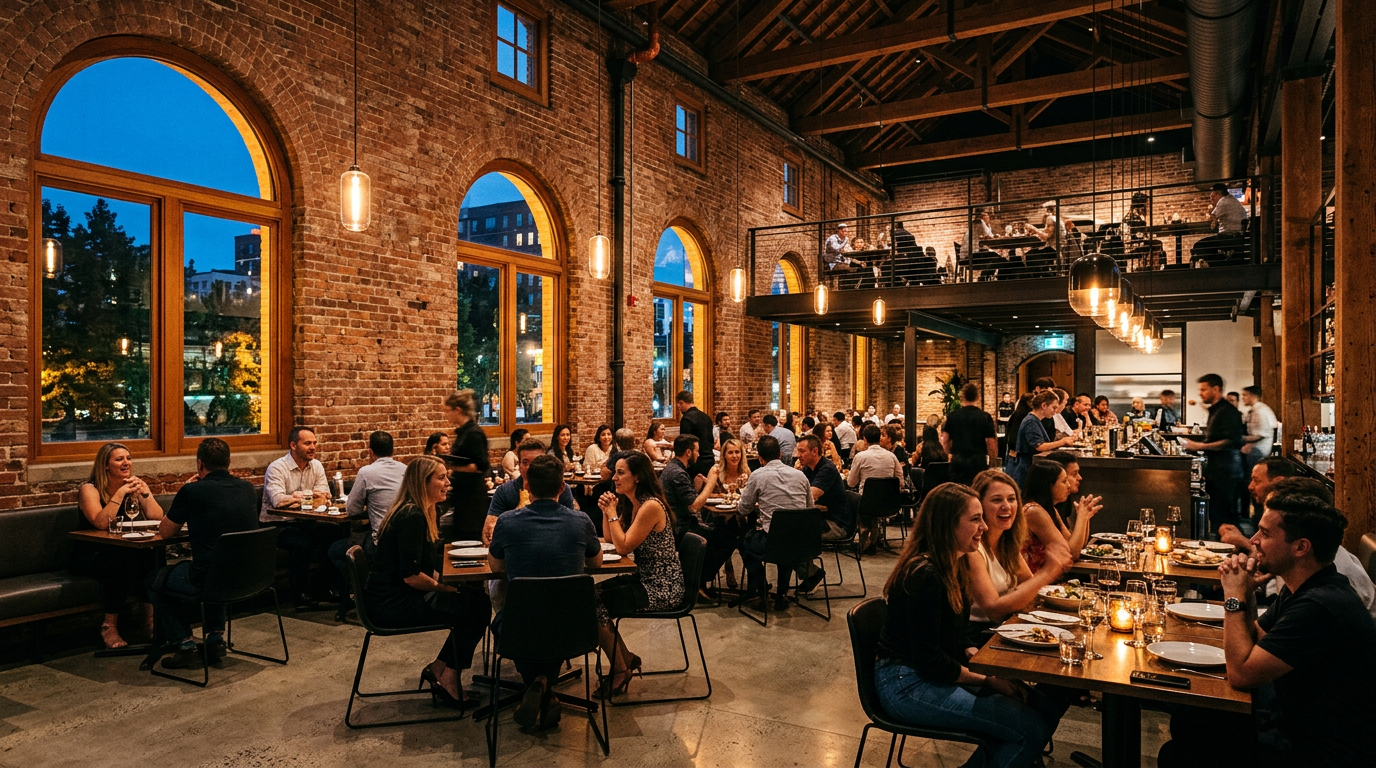
Developers and business owners often face a choice: build new or renovate. But a third option, adaptive reuse, is gaining momentum as a smarter path. By transforming an existing structure for a new purpose, a project can gain unique character, reduce its environmental impact, and often reach completion faster than a ground-up build.
Adaptive reuse is not merely a renovation. It is a creative reinvention. It means seeing a forgotten warehouse not as a relic, but as a future boutique hotel. It’s looking at an old bank and envisioning a bustling restaurant. This approach brings history and architecture together.
The Business Case for Adaptive Reuse
Choosing to build new is often seen as the default, but adaptive reuse presents compelling business advantages that challenge that assumption. These projects can be financially astute, offering savings and creating value in ways that new construction cannot. A thoughtful analysis often reveals a strong economic argument for working with what already exists.
The first financial benefit comes from the structure itself. With the building shell already in place, you can realize significant savings on materials and the labor required for ground-up construction. This is especially true when a building has "good bones," meaning its primary structural elements are sound.
Additionally, the entitlement and approvals process can be faster. Municipalities often favor adaptive reuse projects because they revitalize neighborhoods and prevent demolition waste. This can translate into a quicker path to permitting, reducing costly delays and holding expenses that plague many new construction projects.
- Reduced Material Costs: The existing structure, foundation, and envelope are valuable assets that do not need to be purchased or built from scratch.
- Faster Timelines: Avoiding lengthy demolition and foundation work can shorten the overall project schedule, allowing a business to open its doors and generate revenue sooner.
- Tax Incentives: Many cities and states offer tax credits and other financial incentives for the preservation and rehabilitation of historic or significant buildings, directly improving the project's bottom line.
Retaining Character and Identity
New buildings can feel anonymous. They lack the stories and textures that time imparts. Adaptive reuse projects, however, come with a built-in narrative. The architectural details of a bygone era, from brick walls to intricate window casings, become irreplaceable assets for a new brand or business.
This inherent character is a powerful differentiator in a crowded marketplace. A restaurant in a converted fire station or a tech office in a former textile mill has a unique identity from day one. Customers and tenants are drawn to spaces that feel authentic and memorable. Architects excel at finding the soul of a building and expressing it.
By celebrating the history of a place, a business can create a deeper connection with its community. The building itself becomes part of the customer experience, a talking point that reinforces brand identity in a way no new-build can replicate.
Architects skilled in adaptive reuse do more than just preserve. They create a dialogue between old and new. They might expose original timber beams while inserting sleek, modern glass partitions. This contrast highlights the beauty of both eras, resulting in a space that is richer and more complex than a purely contemporary design.
Sustainability and Environmental Responsibility
The greenest building is the one that already exists. This simple truth is at the heart of the environmental argument for adaptive reuse. Every new construction project consumes a massive amount of resources and generates significant carbon emissions, a concept known as embodied carbon.
Embodied carbon includes all the emissions associated with the entire building process, from extracting raw materials and manufacturing products to transporting them to the site and assembling them. By preserving an existing structure, a significant portion of these emissions is avoided entirely. The embodied carbon of the original building is a sunk cost; reusing it is a massive environmental win.
Beyond carbon, adaptive reuse also prevents tons of demolition waste from entering landfills. Concrete, wood, steel, and other materials are given a second life instead of being discarded. This aligns with the principles of a circular economy, where resources are kept in use for as long as possible.
Navigating the Challenges of Adaptive Reuse
Of course, reusing an old building is not without its difficulties. The process requires a specialized skill set and a flexible mindset. Unforeseen conditions are the rule, not the exception. A project team must be prepared to solve problems creatively as they arise during demolition and construction.
Key challenges often include:
- Hazardous Materials: Older buildings may contain asbestos, lead paint, or other materials that require careful and costly remediation.
- Code Compliance: Bringing an old structure up to modern building codes for accessibility, fire safety, and seismic stability can be complex.
- Structural Surprises: Hidden structural deficiencies or outdated systems may require significant and unexpected investment to rectify.
The Importance of the Right Team
Success in an adaptive reuse project hinges on assembling an experienced team from the very beginning. A developer or business owner should seek out an architect, engineers, and a contractor with a proven track record in this specific type of work. They will have the foresight to anticipate potential issues and the expertise to solve them efficiently.
An experienced architect can conduct a thorough feasibility study, helping you understand the real potential and risks of a building before you commit. This initial investigation is one of the most critical steps in the entire process. It turns unknowns into calculated risks.
Adaptive reuse is more than a trend. It is a thoughtful approach to development that offers financial, cultural, and environmental benefits. It requires creativity and expertise, but the result is a richer, more sustainable built environment that honors the past while building for the future.
More from Ejal Insights
- Beyond Green: The Rise of Carbon Accounting in Architecture
- Beyond the Building Shell: How Interior Architecture Shapes Experience
- Beyond the Façade: When Is Adaptive Reuse the Right Choice?
- The Great Divide: How Modern Life Is Splitting the Single-Family Home
- Your Firm's Website Is a Product. Treat It Like One.
- Beyond Green: How Restorative Design Can Heal People and Planet