Your Architect Is Your Most Important Business Partner
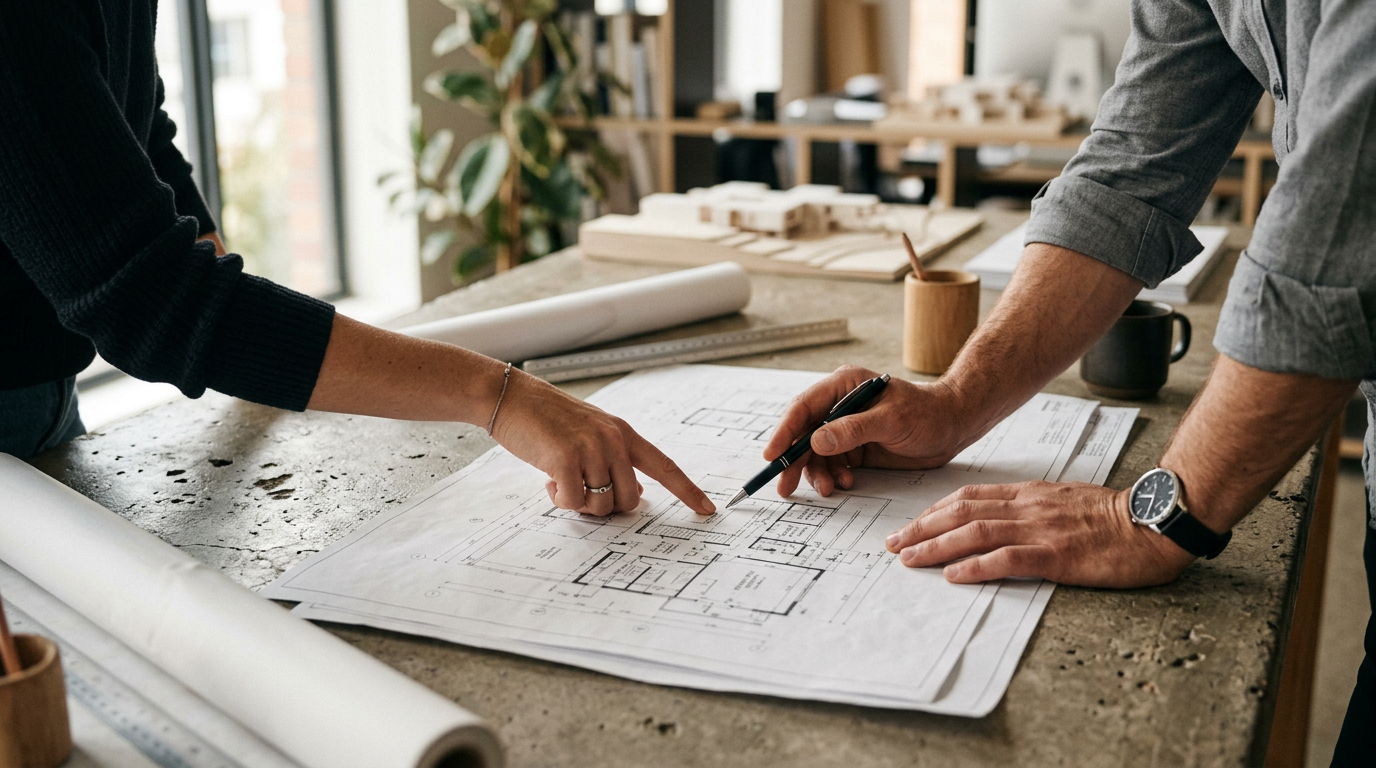
A beautifully designed building that fails to meet its business objectives is not a success. It is a very expensive piece of art. Choosing an architect should be approached with the same rigor as choosing a key business partner or making a significant long-term investment.
A developer builds a multifamily unit that looks great but has poor acoustics and high tenant turnover. A restaurant owner gets a stunning interior but a layout that creates service bottlenecks. A homeowner adds a beautiful wing that, due to poor planning, they can never recoup the value of. These are outcomes where the design was divorced from the goal.
The right architect is more than a stylist. They are a strategic thinker who translates your goals into a physical reality. They protect your investment, find hidden opportunities, and mitigate risk before a single shovel hits the ground.
Beyond Style: Defining Success in Three Dimensions
Your first conversation with a potential architect shouldn't be about aesthetics, it should be about outcomes. Before you ever see a sketch or a mood board, a great architect will want to understand what a successful project means to you, your business, or your family. They should be asking probing questions.
For a business owner, success might be a retail space that increases sales per square foot or an office that attracts and retains top talent. For a developer, it could be maximizing rentable space, achieving a specific green certification, or creating a project that sails through the permitting process. For a homeowner, it might be about long-term energy savings, creating flexible spaces for a growing family, or improving the home's eventual resale value.
Your job is to have these answers ready. Be prepared to discuss your operational needs, your financial model, and your vision for the next five, ten, or even fifty years. A portfolio of beautiful images is table stakes. The real differentiator is a portfolio of successful outcomes.
The Language of Partnership: What to Listen For
A consultation with a potential architect is a two-way interview. While you are assessing them, they should be thoroughly assessing your project. The quality and nature of their questions are a powerful indicator of their depth and approach. Pay close attention to what they ask.
Do their questions revolve only around your taste, or do they dig into function? Do they ask about your customers, your employees, your family routines, or your daily workflow? A truly strategic architect is obsessed with how people will use the space. They think in terms of flow, efficiency, and human experience.
Listen for a vocabulary that balances design with business. Words like return on investment (ROI), user experience, operational efficiency, and life-cycle cost should be part of their language. This doesn't mean they aren't creative. It means their creativity is grounded in tangible, real-world value.
Due Diligence on Process, Not Just Portfolio
Every firm has a glossy portfolio of finished work. What’s often missing is a clear picture of how they got there. The success of your project depends less on the final photos and more on the process that created them. Your due diligence should focus heavily on this process.
Ask detailed questions about their methods. Getting clear, confident answers to these questions is non-negotiable. Look for evidence of a structured, professional, and transparent operation. A great design partner is also a great project manager.
Consider asking about the following:
- Budget Management: How do you establish and track project costs? What is your process for handling changes and communicating budget implications to the client?
- Communication: What is the cadence of communication? Who is the primary point of contact, and what is their seniority? How are key decisions documented and approved?
- Team Structure: Who, specifically, will be working on this project day-to-day? Can we meet them? How does the firm's leadership stay involved?
- Consultant Coordination: How do you select and manage engineers, landscape architects, and other consultants? What is your track record on integrated project delivery?
Case Studies in Value
Think about the value an architect generates. An experienced firm can often point to examples where their strategic input created a financial or operational win for a client. A skilled retail architect might reconfigure a store layout to expose customers to more merchandise, directly increasing sales. An office design expert might create a plan that fosters collaboration, measurably improving employee productivity and satisfaction.
For a developer, a smart architect might devise a site plan that fits two extra units while still creating a desirable green space. For a homeowner, it could be as simple and profound as orienting a home or an addition to maximize natural light, drastically reducing utility bills and improving wellbeing for years to come.
These are not just happy accidents. They are the result of an architect thinking like a partner, constantly seeking ways to align the physical design with the underlining strategic goals of the project.
The best architects understand that the building is not the end product. The end product is a thriving business, an efficient home, or a profitable development. The building is simply the means to that end.
Measuring the Unseen: Long-Term Value
The most significant contributions of a great architect are sometimes the hardest to measure on a spreadsheet. How do you quantify the brand lift from a landmark building that becomes synonymous with your company's identity? What is the ROI on an office environment so effective that your best employees never want to leave?
This long-term, intangible value is where a strategic architecture partner truly proves their worth. They don’t just solve the problems you have. They anticipate the challenges and opportunities you haven't even considered. They help you build not just a structure, but a resilient and valuable asset.
Choosing an architect is one of the most critical decisions you will make. By shifting your evaluation from that of a stylist to that of a strategic partner, you set the foundation for a project that delivers value, beauty, and performance for decades to come.
More from Ejal Insights
- Beyond Green: The Rise of Carbon Accounting in Architecture
- Beyond the Building Shell: How Interior Architecture Shapes Experience
- Beyond the Façade: When Is Adaptive Reuse the Right Choice?
- The Great Divide: How Modern Life Is Splitting the Single-Family Home
- Your Firm's Website Is a Product. Treat It Like One.
- Beyond Green: How Restorative Design Can Heal People and Planet