Why Great Architectural Photography Is Your Best Marketing Tool
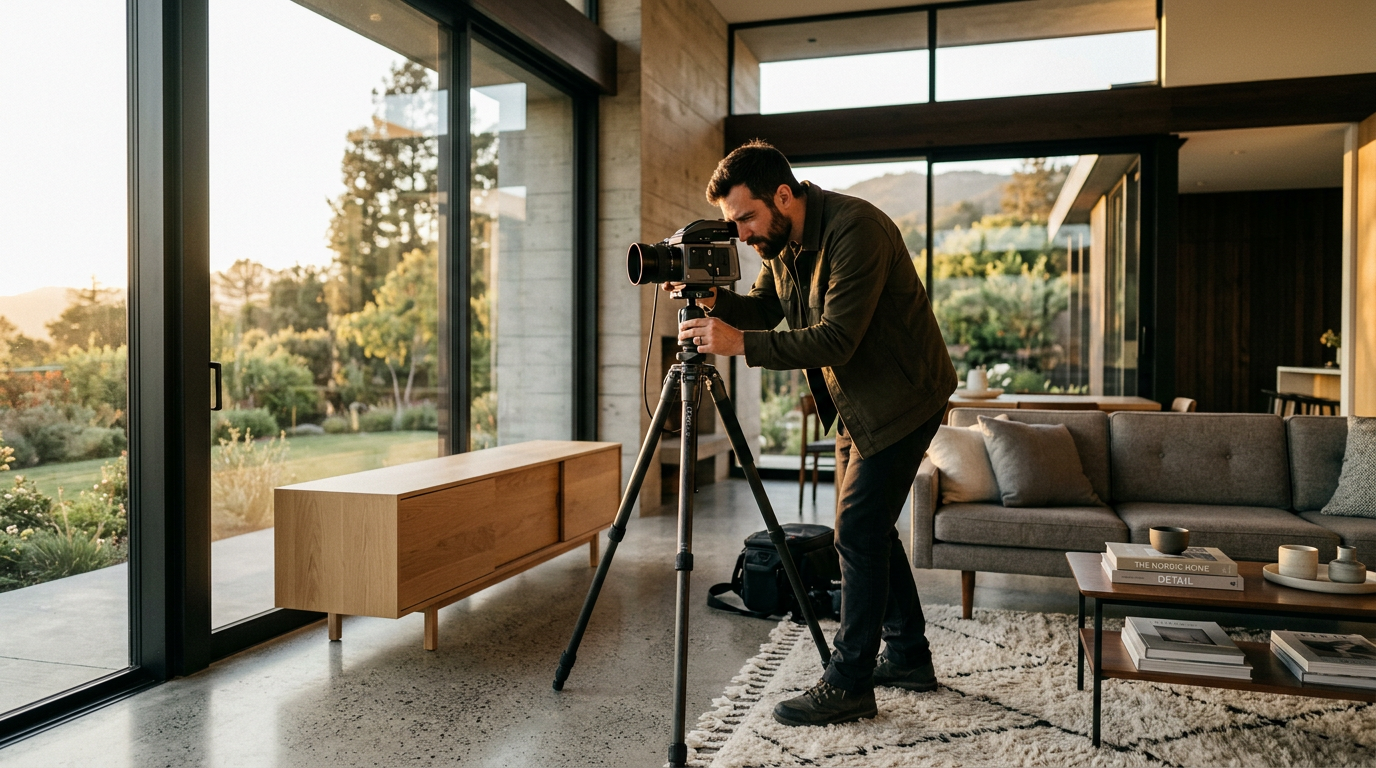
Architectural photography is your most important marketing asset. More than a website or an award, the images of your completed work are the tangible result of your service. They are the primary tool clients use to judge your firm’s quality, style, and capability. Investing in professional photography is not an expense, it is the packaging for your entire portfolio.
Good photos do more than just document a project. They tell a story about the design, the materials, and the way light activates a space. They create an emotional connection with the viewer, whether it’s a potential residential client imagining their life in a home or a developer assessing your firm’s commercial viability. These images are a direct reflection of your firm’s standards.
Photography Defines Your Brand
Your portfolio is your promise. For firms seeking to establish a clear brand identity, photography is the most direct way to communicate it. Are you known for sharp, minimalist interventions or warm, contextual additions? The photographic style you commission should align with and amplify this identity. The way a space is lit, composed, and styled in a photograph speaks volumes about your firm’s own design sensibilities.
A consistent photographic language across your portfolio creates a cohesive and recognizable brand. When a potential client sees an image from your firm on social media or in a magazine, they should begin to recognize its origin without even seeing your name. This visual consistency builds brand equity, making your work memorable in a crowded market.
The difference between a good photograph and a great one is the difference between documenting a building and capturing its soul. One is a record. The other is an experience.
The Ripple Effect of a Strong Photoshoot
A single photoshoot is not a single-use asset. It is the beginning of a content cascade that can fuel your marketing efforts for months or even years. The initial investment pays dividends across numerous platforms, each tailored to a different audience or purpose. This is how you maximize the value of every single image.
From one set of professional photos, a firm can generate a wide array of marketing materials. The key is to think strategically about how each image can be cropped, used, and repurposed. A single hero shot of a project exterior can become a website banner, a magazine ad, and an Instagram post, all with minor adjustments.
Here’s how one project’s photos can ripple outward:
- Website: High-resolution images form the core of your online portfolio, the most detailed and controlled showcase of your work.
- Social Media: Photos can be cropped into different formats (square for Instagram feeds, vertical for Stories) to share progress, details, and final results.
- Press & Publications: Editors at design magazines and blogs require professional, high-quality images. Great photography is the price of entry for media coverage.
- Awards Submissions: Strong visuals are critical for conveying the merit of a project to an awards jury, often before they ever read the project description.
- Proposals & RFPs: Including stellar images of relevant past projects in a proposal makes your qualifications immediately tangible and compelling.
- Client Presentations: Use images to walk new prospects through your design process and show them the caliber of work you deliver.
What Makes Architectural Photography "Great"?
Not all photography is created equal. Hiring a generalist photographer, even a talented one, is rarely the right choice for an architecture firm. An architectural photographer is a specialist who understands buildings, light, and composition in a way that serves the design’s intent. Their job is to translate three-dimensional space into a compelling two-dimensional image.
Key qualities distinguish professional architectural photography:
- Understanding of Light: A great photographer knows how to shoot a space at the right time of day, using natural light to reveal form and texture. They may use supplemental lighting, but it is done to enhance, not overwhelm, the natural conditions.
- Composition and Lines: They possess a fanatical attention to vertical and horizontal lines. Crooked or converging verticals are a tell-tale sign of amateur work and are incredibly distracting. They compose shots that guide the eye through the space intentionally.
- Storytelling: The photographer works with the architect to understand the project’s core concepts. The resulting images should tell that story, focusing not just on the whole building but on the details, materials, and moments that make the design special.
- Styling: The best photographers know that a little styling goes a long way. This does not mean completely redecorating, but rather editing the scene to remove clutter and arrange objects to improve the composition and create a lived-in, yet curated, feel.
Finding and Budgeting for the Right Photographer
Finding the right photographer is like finding any key consultant. It requires research and a clear understanding of your own goals. Start by looking at the work of firms you admire. Who is shooting their projects? Architectural publications often credit the photographer, which is a great place to discover new talent.
When you approach a photographer, be prepared to discuss your project, your brand, and your budget. Photography is typically priced on a day rate or per-image basis. While it may seem like a significant expense, remember its value. It is better to photograph one project exceptionally well than to photograph three projects poorly. A common mistake is to see photography as a final-hour add-on. Instead, it should be planned for from the project
More from Ejal Insights
- Beyond Green: The Rise of Carbon Accounting in Architecture
- Beyond the Building Shell: How Interior Architecture Shapes Experience
- Beyond the Façade: When Is Adaptive Reuse the Right Choice?
- The Great Divide: How Modern Life Is Splitting the Single-Family Home
- Your Firm's Website Is a Product. Treat It Like One.
- Beyond Green: How Restorative Design Can Heal People and Planet