Beyond Green: The Rise of Carbon Accounting in Architecture
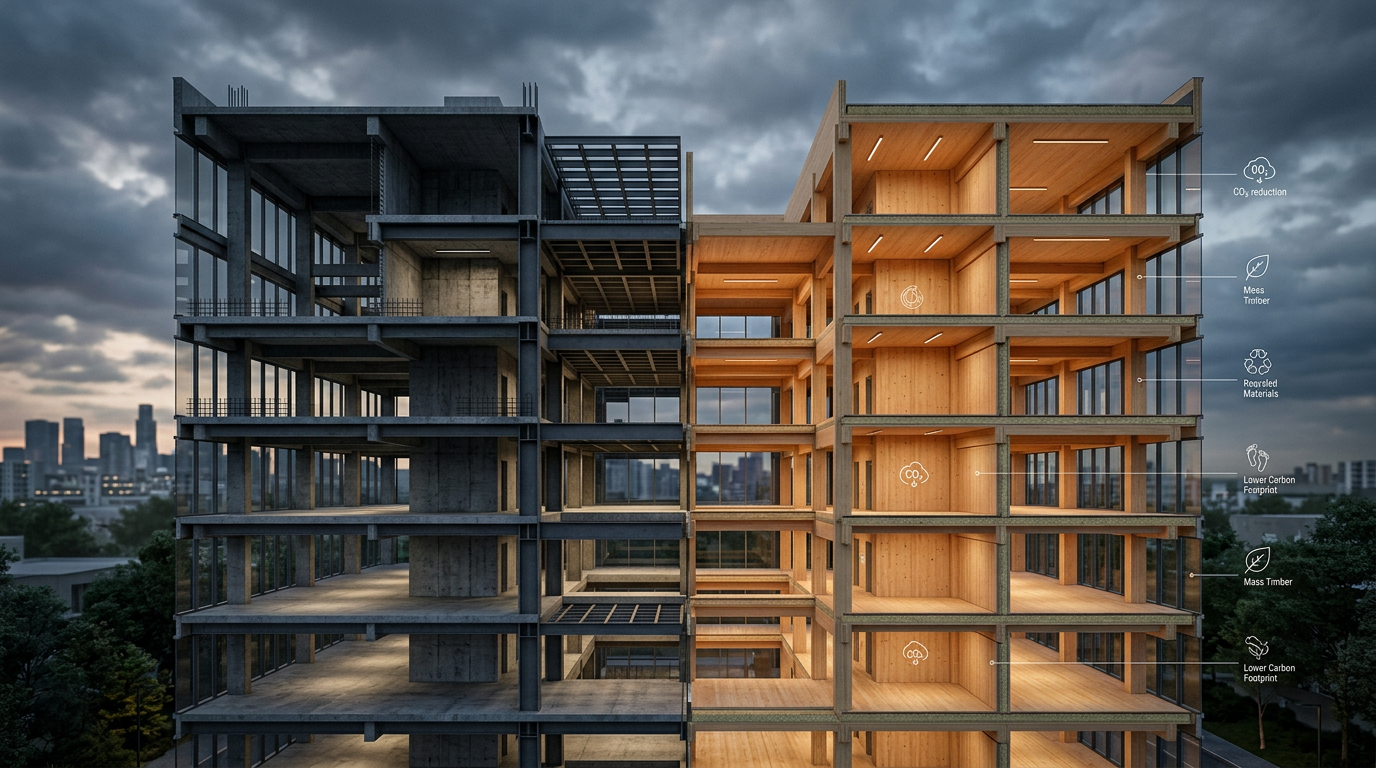
Architecture is facing a critical challenge. For decades, "green design" has focused on operational efficiency through better insulation, solar panels, and smarter systems. These are worthy goals, but they only address part of a building’s carbon footprint. The next frontier is embodied carbon, the total emissions from manufacturing, transporting, and installing building materials.
Carbon accounting is the comprehensive process of measuring both operational and embodied carbon. It provides a full ledger of a project's climate impact, from raw material extraction to demolition and reuse. This data-driven approach moves architecture from vague sustainability claims to verifiable performance, creating a new standard for what it means to build responsibly.
The Two Sides of the Carbon Coin
To understand a building's full climate impact, architects and clients must account for two distinct types of carbon emissions. Both are critical, but they require different strategies to manage.
Operational Carbon
This is the carbon most people think of. Operational carbon is the sum of emissions produced during a building’s life in use. It includes the energy consumed for heating, cooling, lighting, and powering appliances. For a long time, this was the primary focus of sustainable design, leading to significant advances in energy efficiency.
Reducing operational carbon remains vital. Strategies involve high-performance building envelopes, efficient HVAC systems, LED lighting, and on-site renewable energy generation. The goal is to minimize the energy a building needs to function day-to-day. A building with low operational carbon costs less to run and places less strain on the electrical grid.
Embodied Carbon
This is the hidden, upfront carbon footprint. Embodied carbon encompasses all the greenhouse gas emissions associated with the materials and construction processes of a building. It includes the extraction of raw materials, manufacturing, transportation to the site, and the energy used during construction. These emissions are locked into the building before it is even occupied.
For new construction, embodied carbon can represent a massive portion of the building's total emissions over its first few decades. As our buildings become more operationally efficient, the significance of embodied carbon only grows. Ignoring it means ignoring a huge piece of the climate puzzle.
The most sustainable building is often the one that already exists. Renovating and adapting an old structure almost always has a lower embodied carbon footprint than tearing it down and building new.
Why Carbon Accounting is Becoming Essential
Adopting a carbon accounting framework is no longer a niche practice for elite projects. It is rapidly becoming a practical necessity driven by regulatory pressure, market demand, and a clearer understanding of climate risk. It helps firms and clients make smarter, more responsible decisions.
Several factors are pushing this shift:
- Regulation: Cities and states are introducing policies that cap embodied carbon levels in new construction. Early adopters of carbon accounting will have a significant advantage in navigating these new rules.
- Client Demand: Corporate clients with their own sustainability goals (ESG targets) are increasingly demanding low-carbon buildings to align with their brand values and reporting requirements.
- Risk Management: Buildings with a high carbon footprint may be subject to future carbon taxes or stricter regulations, making them less valuable over time. Low-carbon buildings are a more resilient long-term investment.
- Competitive Differentiation: Firms that can effectively measure, manage, and communicate a project's carbon footprint can distinguish themselves from the competition, attracting discerning clients and talented staff.
Tools and Strategies for Lowering Embodied Carbon
Measuring embodied carbon requires specialized software that integrates with an architect's design models. These tools, known as Life Cycle Assessment (LCA) software, analyze the materials specified in a project and calculate their associated carbon footprint based on industry data.
With this data, architects can make informed substitutions and design choices. The key is to start early. The greatest impact on embodied carbon can be made during the initial concept and schematic design phases. Key strategies include:
Material Selection
Choosing low-carbon materials is the most direct way to reduce embodied carbon. This involves looking beyond aesthetics and structural performance to understand a material's origin story.
- Mass Timber: Products like cross-laminated timber (CLT) can replace steel and concrete for a building’s structure, sequestering carbon within the wood itself.
- Recycled Content: Specifying materials with high recycled content, such as recycled steel or aluminum, dramatically lowers their carbon footprint compared to virgin materials.
- Local Sourcing: Reducing transportation distances for heavy materials like stone or concrete can make a meaningful difference.
- Innovative Materials: New products like carbon-capturing concrete and bio-based insulation are entering the market, offering new pathways to decarbonization.
Design for Disassembly
A truly forward-thinking approach is designing for future reuse. This means thinking about a building’s end of life from the very beginning. By using mechanical fasteners instead of chemical adhesives and designing modular components, architects can make it easier to deconstruct the building and salvage its materials for another purpose. This turns demolition waste into a resource for the next generation of buildings.
The Architect's Role in a Low-Carbon Future
The shift toward comprehensive carbon accounting places the architect at the center of the climate solution. It expands the architect's role from designer of spaces to a strategic advisor who can guide clients toward genuinely sustainable outcomes that create long-term value.
This requires a new skill set. Architects must become proficient in LCA tools and develop a deep understanding of material science and supply chains. More importantly, they must learn to communicate the value of carbon reduction to clients in clear, compelling terms, connecting it to financial returns, risk mitigation, and brand enhancement.
Ultimately, carbon accounting provides the data needed for accountability. It moves the conversation from good intentions to measurable results, ensuring that every design decision contributes to a more resilient and responsible built environment. It is the new foundation for design excellence.
More from Ejal Insights
- Beyond the Building Shell: How Interior Architecture Shapes Experience
- Beyond the Façade: When Is Adaptive Reuse the Right Choice?
- The Great Divide: How Modern Life Is Splitting the Single-Family Home
- Your Firm's Website Is a Product. Treat It Like One.
- Beyond Green: How Restorative Design Can Heal People and Planet