Beyond the Building Shell: How Interior Architecture Shapes Experience
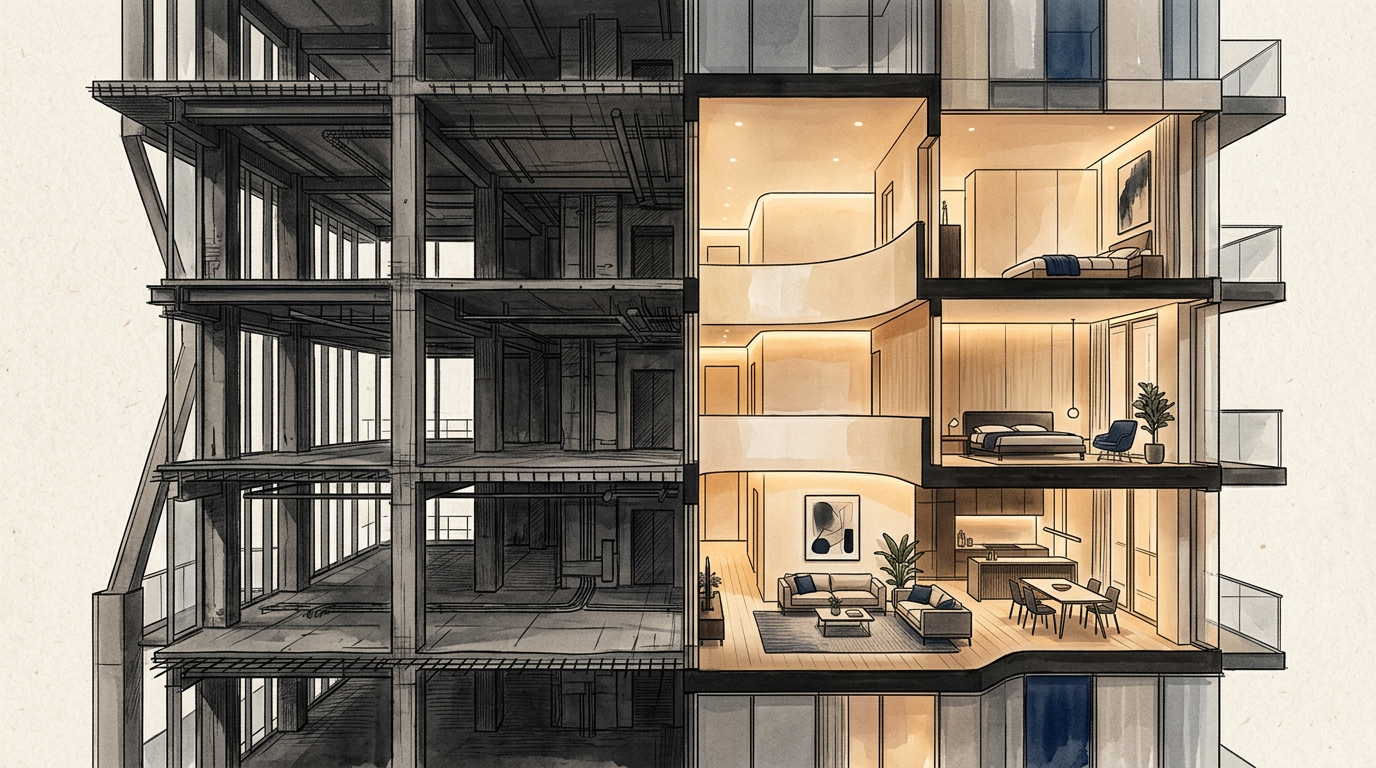
True innovation in architecture often happens from the inside out. While a building’s exterior makes a statement, its interior determines how people feel, work, and live within it. This is the domain of interior architecture, a discipline focused on the experiential quality of a space, shaping everything from occupant flow to emotional response.
Interior architecture is not a synonym for interior design. It operates at the intersection of architecture, design, and human psychology. It considers the building shell, its systems, and its structure as the starting point. From there, it crafts the internal volumes, circulation paths, and material palettes that define the human experience within that shell. For developers, homeowners, and businesses, understanding its value is key to creating spaces that are not just occupied, but are truly effective.
Structure Meets Strategy: The Core of Interior Architecture
At its heart, interior architecture is about the strategic design of interior space. It’s a holistic practice that addresses the functional and aesthetic requirements of a building’s inhabitants. This goes far beyond selecting furniture or color schemes. It involves re-imagining how a space can perform and what it can communicate.
For a commercial building, this could mean designing a lobby that intuitively guides visitors while reflecting the company’s brand ethos. For a home, it might involve altering the floor plan to create better sight lines and a more natural flow between living areas. It is the art of sculpting space itself. This discipline considers elements like:
- Spatial Volume: How does the height and scale of a room affect its feel and function?
- Light and Shadow: How can natural and artificial light be manipulated to enhance mood and usability?
- Materiality: What do the surfaces, textures, and finishes communicate about the space?
- Circulation: How do people move through the building, and how can that journey be made more efficient and pleasant?
By focusing on these foundational elements, interior architecture ensures that the interior is a direct and purposeful extension of the building’s core design intent. It’s about creating a cohesive and compelling narrative from the moment someone steps inside.
The Psychology of Space: Designing for Human Behavior
Every design choice within a building has a psychological impact. The layout of an office can either encourage collaboration or foster isolated work. The lighting in a restaurant can make it feel energetic and social or quiet and intimate. Interior architecture intentionally uses these principles to shape human behavior and well-being.
Well-designed interior architecture doesn’t just accommodate a function. It actively supports and enhances the human activities taking place within it. It anticipates the needs of the occupants and builds the solutions directly into the environment.
Consider the concept of "prospect and refuge," an idea from environmental psychology. People are often most comfortable in spaces where they have a clear view of their surroundings (prospect) from a protected or enclosed position (refuge). An interior architect might apply this by designing a seating nook that looks out over a larger open area, providing a sense of both security and connection.
This psychological approach is critical for creating successful environments. In a retail setting, clear circulation paths and well-lit product displays can guide customer behavior and improve sales. In a healthcare facility, a calming color palette, access to natural light, and intuitive wayfinding can reduce patient anxiety. It’s about building empathy into the very walls of a structure.
From Concept to Completion: The Process and Value
The work of an interior architect begins early in the design process. They collaborate with the base building architect to ensure that the structural grid, window placements, and core services will support the desired interior experience. This early involvement prevents costly changes later on and leads to a more integrated final product.
The process often involves several key phases:
- Programming and Discovery: Identifying the client’s goals, the functional needs of the users, and the constraints of the space.
- Conceptual Design: Developing high-level plans and sketches that explore different spatial layouts and aesthetic directions.
- Design Development: Refining the chosen concept with specific material selections, lighting plans, and detailed drawings.
- Construction Documentation: Creating the technical drawings and specifications that builders will use to construct the interior.
For a business owner or developer, the value is clear. A well-executed interior can increase employee productivity, enhance brand identity, and create a more marketable property. For a homeowner, it results in a living space that is not only beautiful but also deeply functional and aligned with their lifestyle.
The Blurring Lines: When Disciplines Converge
Many modern architecture firms now offer interior architecture as a core service, recognizing that the inside of a building cannot be separated from the outside. This integrated approach ensures a seamless design vision. The same concepts of form, light, and material that define the building’s facade are carried through to the interior, creating a powerful and unified experience.
This convergence benefits clients. It simplifies communication, streamlines the design process, and ensures that the final building feels like a single, cohesive entity. It removes the artificial barrier between the "building" and its "decoration," treating the entire project as one experiential design challenge.
Ultimately, interior architecture is about the thoughtful creation of place. It’s the critical link between a building’s structure and the lives lived within it. By focusing on the human experience, it transforms empty volumes into meaningful, effective, and resonant environments. Whether you are building a new headquarters or renovating a home, considering the architecture of the interior is essential to achieving true design excellence.
More from Ejal Insights
- Beyond Green: The Rise of Carbon Accounting in Architecture
- Beyond the Façade: When Is Adaptive Reuse the Right Choice?
- The Great Divide: How Modern Life Is Splitting the Single-Family Home
- Your Firm's Website Is a Product. Treat It Like One.
- Beyond Green: How Restorative Design Can Heal People and Planet