Beyond the Portfolio: How to Evaluate an Architect’s Process
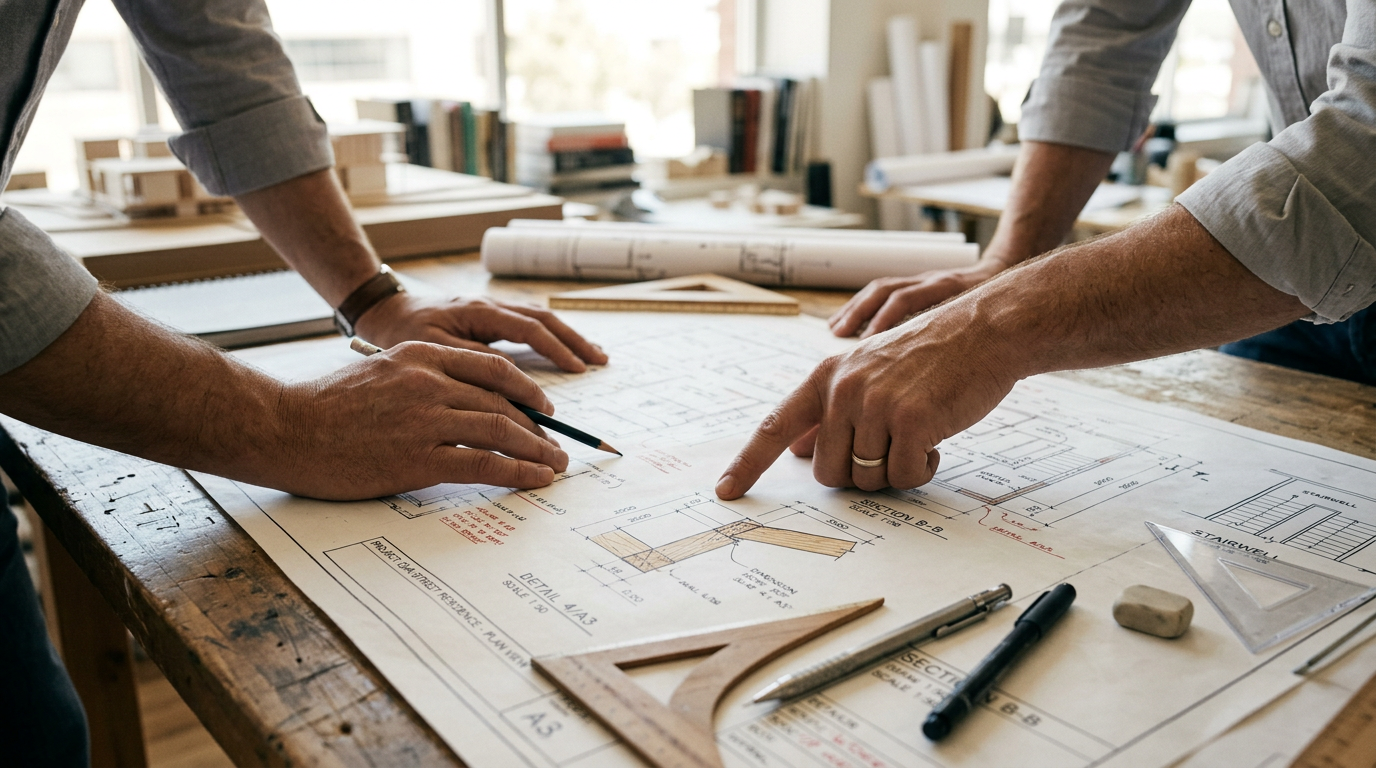
Finding the right architect is about more than just beautiful photos. While a stunning portfolio is important, the firm’s design and management process is what will truly shape your experience and the project’s outcome. Understanding this process is the key to a successful partnership.
Great projects are not happy accidents. They are the result of a deliberate, well-honed methodology that balances creative vision with budget realities, client communication, and project management. When you hire an architect, you are not just buying a final design; you are investing in a service and a relationship.
Communication: The Foundation of Process
Before any design work begins, you need to know how your team will communicate. A clear communication protocol prevents misunderstandings, manages expectations, and keeps the project moving forward. Assumptions here are dangerous. Ask direct questions about how the firm handles client dialogue.
Look for a structured approach. Do they schedule regular check-in calls? Do they use a project management portal for updates? Who is your primary point of contact, and what is their availability? A firm that has clear, concise answers to these questions demonstrates experience and a client-focused mindset.
A great architect doesn't just present ideas; they create a dialogue. Their process should be built on listening and responding, not just directing.
Key Communication Indicators:
- Structured Meetings: A clear schedule for regular meetings (weekly, bi-weekly) with set agendas.
- Defined Contact: A designated primary contact person for all your questions.
- Documentation: A system for documenting decisions and sharing meeting notes to ensure everyone is on the same page.
- Responsiveness: A clear policy on response times for calls and emails.
The Design Phases: From Concept to Reality
A professional architecture firm doesn’t just jump into construction drawings. They guide you through distinct phases, each with its own purpose and deliverables. Understanding these phases helps you gauge your progress and know what to expect. While they can vary slightly, they generally follow a predictable path.
Typically, this journey starts with Pre-Design or Programming, where you define the project's goals, scope, and initial budget. This is followed by Schematic Design, where the architect develops the general form and layout. Design Development (DD) is next, where materials are selected and the design is refined. Finally, Construction Documents (CDs) are the detailed drawings and specifications used for bidding and building.
Ask potential architects to walk you through their specific approach to each phase. How do they involve you? What specific deliverables or sign-offs are required at each stage? A firm that can articulate this clearly is one that has a reliable process in place.
Budget and Financial Stewardship
An architect’s portfolio rarely shows the project’s initial budget or final cost. Your project, however, will be anchored by financial realities. An essential part of an architect's process is how they approach budget management. You need a partner who is not just a designer, but a responsible steward of your financial resources.
Discuss this early. How do they develop initial cost estimates? At what stages do they update the budget? How do they handle changes that have cost implications? A mature process includes regular cost analysis, often involving a cost estimator or contractor, to keep the design aligned with the budget throughout the design phases.
Look for transparency. A firm should be comfortable discussing costs and presenting options to meet your financial goals. They should see the budget not as a constraint on creativity, but as a critical design parameter.
Collaboration with Builders and Consultants
Architecture is a team sport. Your architect will need to coordinate with structural engineers, mechanical engineers, landscape architects, and, most importantly, the contractor. Their process for managing this collaboration is a strong indicator of their ability to lead a project to successful completion.
Ask about their relationships with builders. Do they have a network of trusted contractors they have worked with before? How do they prefer to structure the architect-contractor relationship? Some projects benefit from bringing a builder on board early in the design process to provide input on cost and constructability.
Key questions to ask:
- How do you handle consultant coordination?
- At what stage do you recommend bringing in a general contractor?
- Can you describe a time you resolved a disagreement between team members on a project?
A firm’s ability to foster a collaborative, non-adversarial environment is invaluable. Their process should reflect a spirit of partnership aimed at achieving the best outcome for you, the client.
Finding the Right Fit
Ultimately, choosing an architect is a decision based on trust. You are trusting them with a significant investment of time, money, and emotion. While a beautiful portfolio can capture your imagination, a well-defined and transparent process is what will give you confidence.
By asking these deeper questions, you move beyond the surface-level appeal of finished photos. You gain insight into how the firm works, communicates, and solves problems. This understanding of their process is what allows you to find a true partner for your project.
More from Ejal Insights
- Beyond Green: The Rise of Carbon Accounting in Architecture
- Beyond the Building Shell: How Interior Architecture Shapes Experience
- Beyond the Façade: When Is Adaptive Reuse the Right Choice?
- The Great Divide: How Modern Life Is Splitting the Single-Family Home
- Your Firm's Website Is a Product. Treat It Like One.
- Beyond Green: How Restorative Design Can Heal People and Planet