How to Write an Architecture Proposal That Wins the Project
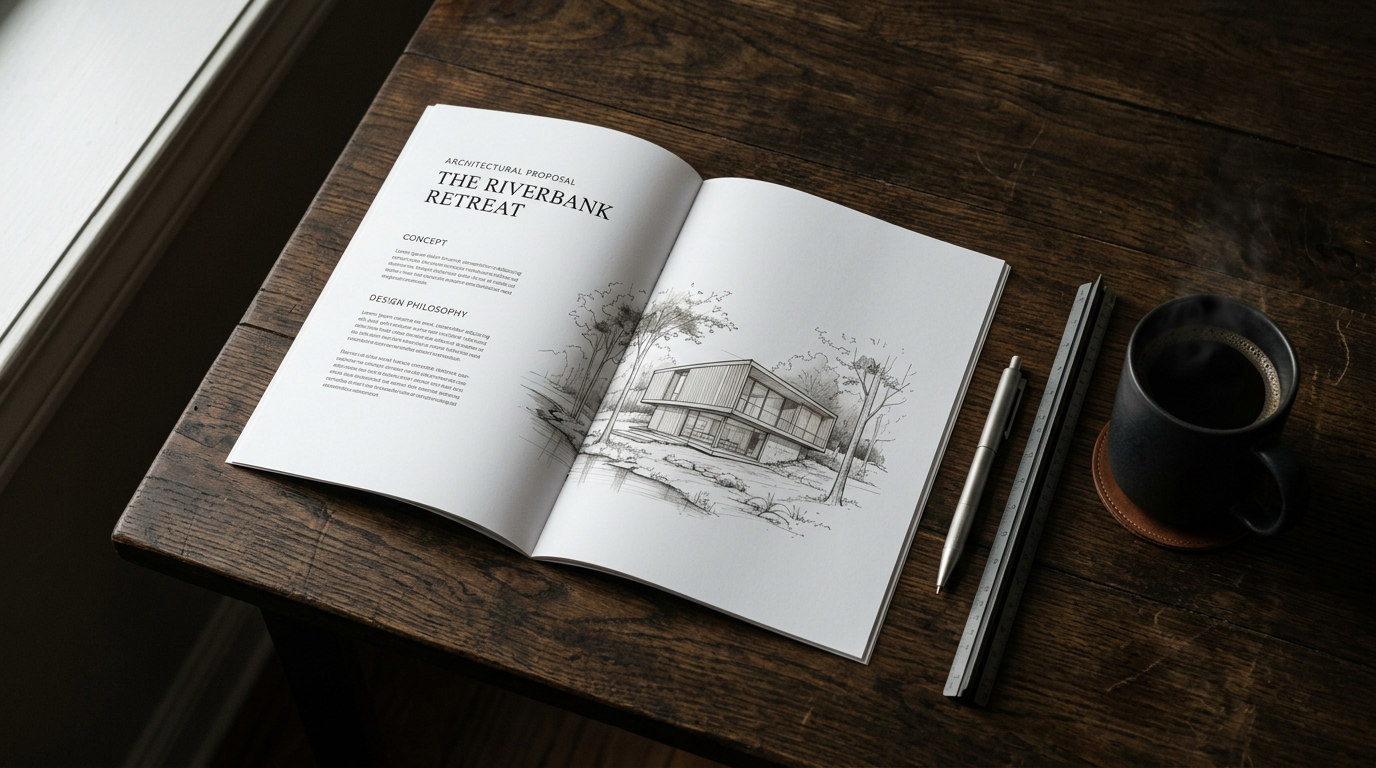
An architecture proposal is your firm’s first real audition for a project. It’s much more than a price list. It is a strategic document that frames the entire client relationship, showcasing your understanding, professionalism, and unique value before a single line is drawn.
For clients, the proposal offers a window into how a firm thinks. It separates the thoughtful practitioners from those just going through the motions. A thorough, well-crafted proposal is a sign of a thorough, well-crafted project to come.
Beyond the Fee: What a Proposal Signals
A proposal is a diagnostic tool. Its clarity, organization, and tone tell a client a great deal about what it will be like to work with you. A hastily assembled document filled with jargon or generic text suggests a similar approach to the project itself.
A great proposal signals respect. It shows you’ve listened carefully and invested time in thinking about the client’s specific situation. This document is your first opportunity to move the conversation from cost to value, establishing a partnership rather than a simple transaction.
Start with Their Vision, Not Your Resume
Many firms make the mistake of opening a proposal with a long, self-serving history of their studio. The client, however, is primarily interested in their own project. Your first goal is to prove you understand their needs, challenges, and aspirations.
The initial section should summarize the project as you understand it. Use the client’s own words and reflect their stated goals. This demonstrates active listening and immediately builds confidence that you are aligned with their vision. Only after establishing that shared understanding should you briefly introduce your firm and why you are the right fit for this specific project.
Defining the Scope of Work with Clarity
This is the heart of the proposal. A vague scope of work is a primary source of future conflict. Avoid ambiguity by breaking the project down into distinct phases. For most projects, this includes standard stages like Pre-Design, Schematic Design, Design Development, Construction Documents, Bidding/Negotiation, and Construction Administration.
For each phase, list the specific deliverables and services you will provide. Equally important is clarifying what is not included.
- Example Exclusions: It is wise to state that services like structural engineering, civil engineering, landscape architecture, permitting fees, or extensive 3D renderings beyond what is specified are considered additional services.
A clear scope is your best tool for managing expectations. It protects both you and the client by creating a shared, written understanding of the project boundaries from day one.
This section prevents "scope creep" and ensures you are paid fairly for the work you do. For the client, it provides a clear roadmap of the process.
Presenting Fees with Transparency
Discussing money can be uncomfortable, but it shouldn’t be. Present your fees clearly, confidently, and with context. Tie the fee directly to the detailed scope of work you just outlined, showing the client exactly what their investment covers. Briefly explain your fee structure and why you’ve chosen it for their project.
Common Fee Structures
- Fixed Fee: A stipulated sum for the entire scope of work. This offers the client cost certainty, which is highly valued. It requires you to have a very precise handle on your expected time and effort.
- Percentage of Construction Cost: The fee is a percentage of the final construction budget. This model scales with the project but can create suspicion that the architect is motivated to drive up costs.
- Hourly Rate: Billed hourly, often with a cap or estimate. This is common for initial feasibility studies, very small projects, or services with an undefined scope.
Regardless of the method, break down payments by project phase. This aligns your cash flow with project progress and makes the fee more manageable for the client.
Show, Don
More from Ejal Insights
- Beyond Green: The Rise of Carbon Accounting in Architecture
- Beyond the Building Shell: How Interior Architecture Shapes Experience
- Beyond the Façade: When Is Adaptive Reuse the Right Choice?
- The Great Divide: How Modern Life Is Splitting the Single-Family Home
- Your Firm's Website Is a Product. Treat It Like One.
- Beyond Green: How Restorative Design Can Heal People and Planet