Beyond Green: How Restorative Design Can Heal People and Planet
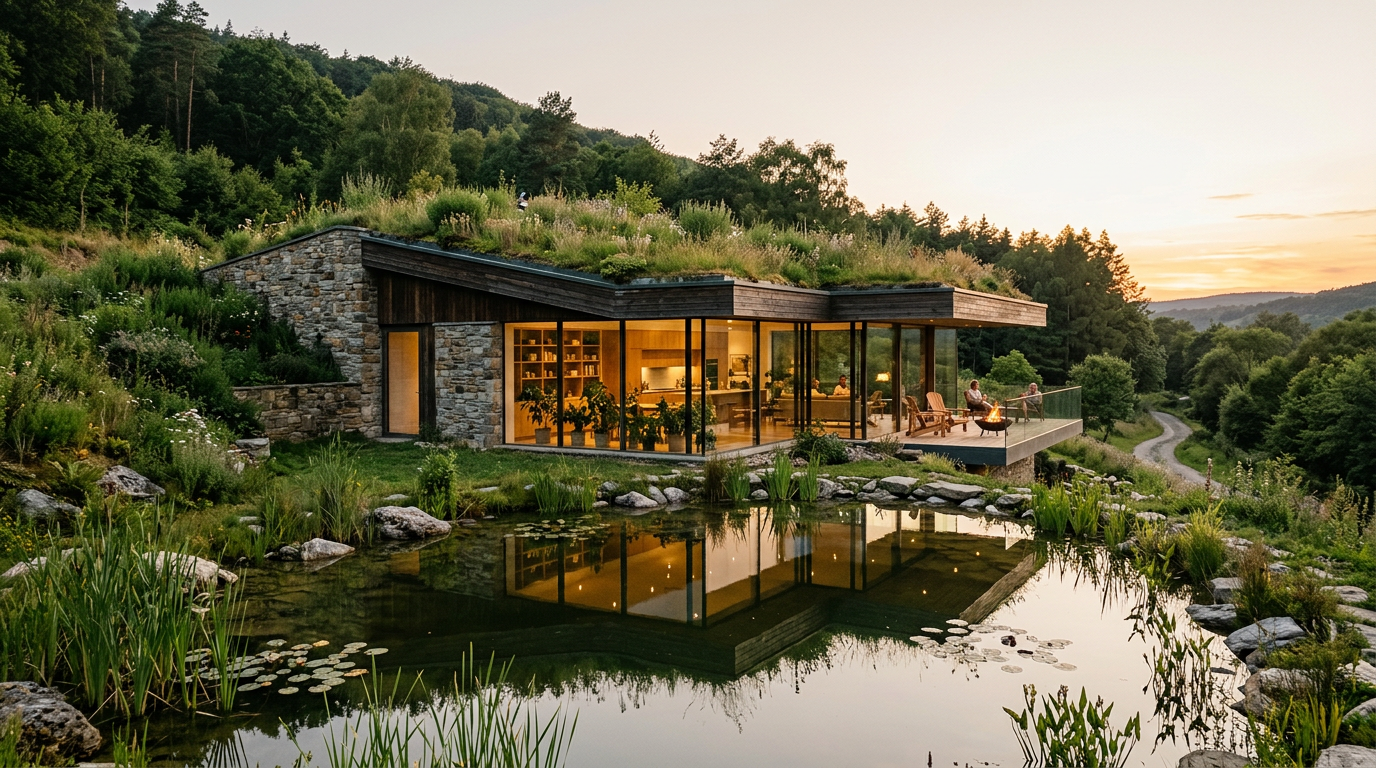
A building can do more than simply reduce its negative impact. Restorative design aims higher, creating spaces that actively improve occupant wellbeing and contribute positively to the natural environment. This approach designs buildings as integrated systems that heal, regenerate, and support life.
Moving past checklists for “green” materials, restorative architecture focuses on the entire life cycle of a project. It considers everything from the carbon footprint of construction to the mental health benefits of daylight and natural views. The goal is to leave both people and places better than they were before.
From Sustainable to Restorative
The concept of sustainability, while critical, often centers on minimizing harm. It asks, “How can we do less bad?” This leads to important but limited goals like reducing energy consumption, using recycled materials, and lowering carbon emissions. These are essential baselines, not the final destination.
Restorative design reframes the question entirely. It asks, “How can we do more good?” This shift in perspective moves the focus from mitigation to regeneration. It is a holistic philosophy that sees the built environment as a powerful tool for positive change, capable of healing ecosystems and enhancing human health simultaneously.
Restorative design is not just about building better buildings. It is about creating a better world, one project at a time.
This approach demands a deeper level of integration. Instead of a collection of sustainable features, a restorative building functions as a living system. It might purify its own water, generate more energy than it consumes, and cultivate biodiversity on its site, all while providing a healthy and inspiring space for its inhabitants.
Principles of Restorative Design
Restorative design is guided by a set of interconnected principles that address both human and ecological health. While every project is unique, these core ideas provide a framework for creating spaces that give back more than they take.
Designing for People (Biophilia)
At its heart, restorative design is human-centric. It leverages the principle of biophilia, our innate tendency to connect with nature. This goes far beyond placing a few potted plants in a lobby. True biophilic design involves a deep integration of natural elements into the architectural experience.
Key strategies include:
- Maximized Daylight: Designing window placements and interior layouts to ensure natural light penetrates deep into the building, reducing the need for artificial lighting and supporting circadian rhythms.
- Natural Materials: Using wood, stone, and other natural materials with minimal processing to create tactile, visually rich environments.
- Views and Vistas: Intentionally framing views of landscapes, water, or gardens to create a constant connection to the outdoors.
- Sensory Richness: Incorporating the sounds of moving water, the scent of plants, and the feeling of natural ventilation to engage all the senses.
Designing for Planet (Regeneration)
The other half of the equation is ecological restoration. A restorative building aims to be a net-positive contributor to its environment. This means actively improving the ecological health of the site and its surroundings.
Regenerative strategies include:
- Net-Positive Energy: Combining passive design strategies like orientation and insulation with active systems like solar panels to generate more power than the building consumes.
- On-Site Water Management: Capturing, treating, and reusing rainwater and greywater, reducing strain on municipal systems and recharging local aquifers.
- Biodiversity: Integrating green roofs, living walls, and native landscaping to create habitats for local flora and fauna, turning the building into a part of the local ecosystem.
- Circular Material Flows: Selecting materials that are either reclaimed, rapidly renewable, or can be easily disassembled and reused at the end of the building’s life, eliminating the concept of waste.
Restorative Design in Practice
This approach is not merely theoretical. Developers and homeowners are increasingly seeking architects who can deliver projects that provide tangible benefits for health and the environment. Businesses see it as a way to improve employee productivity and wellness, while homeowners desire a sanctuary that is both beautiful and deeply connected to nature.
For an office building, this might mean a central atrium flooded with light and filled with vegetation, operable windows that allow for fresh air, and a green roof that serves as a communal garden for employees. The resulting space is not just energy-efficient but is also a place where people feel better and work more effectively.
In a residential context, a restorative home might feature a design that maximizes solar gain in the winter, uses a geothermal system for heating and cooling, and incorporates a rainwater harvesting system for irrigation. The interiors would be finished with non-toxic, natural materials, ensuring excellent air quality and a calming atmosphere.
The Role of the Architect
Executing a truly restorative project requires a shift in the traditional architectural process. It is less about dictating a design and more about facilitating a deeply collaborative and investigative process. Architects become coordinators of a diverse team of experts, including landscape architects, ecologists, engineers, and public health specialists.
This role demands a commitment to whole-systems thinking. The architect must understand how every design decision, from the building’s form to its material palette, affects both the occupants and the surrounding environment. It requires asking different questions at the outset of a project, focusing on the desired positive outcomes rather than just the programmatic requirements.
Ultimately, the architect’s task is to create a place that is not just functional and beautiful, but also meaningful. A restorative building tells a story of stewardship, health, and hope. It demonstrates that our built environment can be a source of healing for both people and the planet.
Embracing restorative design is an investment in a healthier, more resilient future. By moving beyond simply doing less harm, we can create buildings that actively contribute to the wellbeing of our communities and the regeneration of our ecosystems.
More from Ejal Insights
- Beyond Green: The Rise of Carbon Accounting in Architecture
- Beyond the Building Shell: How Interior Architecture Shapes Experience
- Beyond the Façade: When Is Adaptive Reuse the Right Choice?
- The Great Divide: How Modern Life Is Splitting the Single-Family Home
- Your Firm's Website Is a Product. Treat It Like One.