The Architect's Story: How Narrative Wins Better Projects
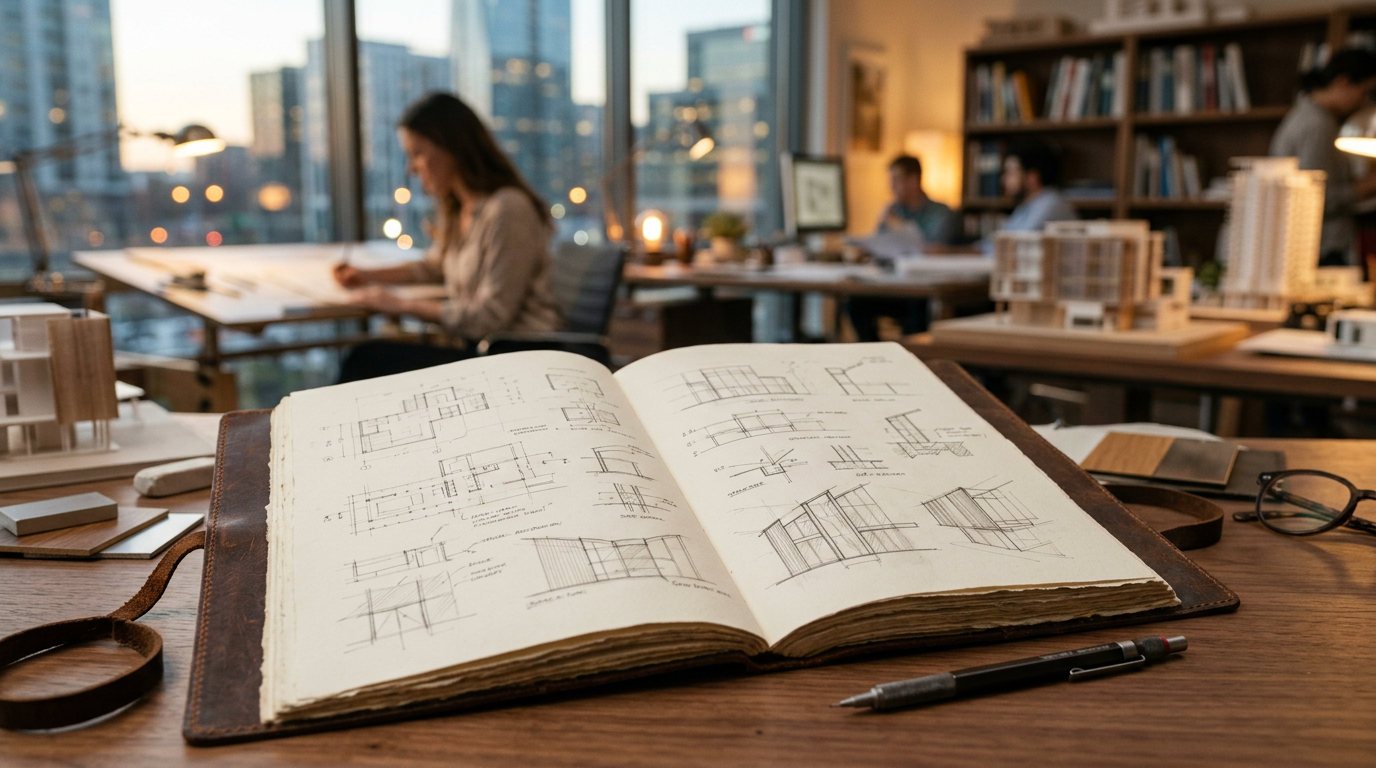
A potential client has two browser tabs open. One for your firm, one for a competitor. Both sites show stunning, high-resolution photos of successful projects. The portfolios are, for all intents and purposes, equal. What makes them close the other tab and call you?
The answer is your story.
Beyond the Portfolio: What Is a Firm's Narrative?
A portfolio proves you can do the work. It’s a catalog of finished products, a vital and necessary tool. But it rarely communicates the intangible qualities that define a great partnership: your values, your process, your approach to problem-solving. This is the role of your narrative.
A firm’s narrative is the cohesive story that connects the dots between your projects, your people, and your purpose. It is the "why" behind the "what." It explains the philosophy that guides your hand, whether you’re designing a custom home, a commercial development, or a public space. Without it, you are a commodity, a vendor of architectural services. With it, you become a trusted partner.
This story provides context. It tells a client not just that a building was completed, but that you solved a complex zoning challenge, or that you found a novel way to use a sustainable material, or that your unique client intake process uncovered a crucial need the client hadn’t even considered.
Finding Your Central Theme
Many architects are so focused on the work itself they never pause to articulate the story of their practice. They believe the work should speak for itself. To a degree, it does. But to attract the right kind of work, you must give it a voice. Finding your narrative requires introspection.
Start by looking for patterns. Your story isn't fabricated, it's discovered. Look at your most successful projects and, more importantly, your happiest clients. What is the common thread? What values created that success and satisfaction? Use these questions to get started:
- Problem: What specific problem do you solve better than anyone else? Is it navigating difficult sites, creating exceptionally energy-efficient buildings, or designing flexible spaces for growing families or businesses?
- Process: What is unique about your process? Do you use physical models extensively, employ a specific virtual reality workflow, or have a distinctive charrette process for client collaboration?
- Passion: What kind of work truly energizes your team? When you talk about a past project with genuine enthusiasm, what is it about that project that excites you?
- People: Why did your team members choose to work at your firm? What values do they share? The collective personality of your firm is a huge part of your story.
Answering these questions honestly will reveal a central theme. Perhaps you are a firm that champions regional materials, or one that thrives on the complexity of adaptive reuse, or one that excels at creating serene, minimalist living spaces. That is the heart of your story.
Weaving the Narrative into Communications
Once you have a grasp of your central story, it must be woven into every aspect of your firm’s presence. This goes far beyond a single "About Us" page. Your narrative should be the lens through which you present all your work.
In project descriptions, don't just list square footage and materials. Tell the project's individual story. Start with the client’s initial challenge or dream. Describe the key design insight that unlocked the solution. Explain how the finished building serves its inhabitants and its environment. Frame the beautiful photos with a compelling account of how they came to be.
A clear narrative acts as a filter. It attracts clients who share your values and are looking for the specific expertise you offer. It gently repels those who would not be a good fit, saving both sides time, energy, and frustration.
This story should also inform your social media, your proposals, and how you speak to potential clients. When you can articulate your firm’s "why" with clarity and passion, you stop selling a service and start building a relationship. Clients are not just buying drawings; they are buying your judgment, your a methodical process, and your unique perspective.
The Story of a Single Project
Applying this thinking at the project level is a powerful exercise. It transforms a simple case study into a compelling example of your firm’s value. Breaking it down helps illustrate the arc you are trying to create.
The Initial Challenge
A family wanted a home that would connect them to the landscape, but the site was steep and awkwardly shaped. They were concerned about privacy from neighbors and the impact on the natural terrain.
The Design Insight
Instead of fighting the topography, your team embraced it. The design partially embedded the lower level into the hillside, creating a private, terraced garden. By orienting the main living spaces to a specific viewpoint, you captured the best views while shielding the home from adjacent properties.
The Result and Impact
The final home feels like a natural extension of the site. The clients have the seamless indoor-outdoor connection they dreamed of, and the home’s footprint is surprisingly gentle on the land. The story isn't just "a modern house on a hill," but "a thoughtful solution to a complex site that fulfilled a specific client vision." This is a story that resonates.
Why Clients Should Listen for the Story
For homeowners, developers, and business owners seeking an architect, this perspective is equally important. When you evaluate a firm, look beyond the glossy images. Read their project descriptions. See if they articulate a clear process and a set of guiding principles. Do they explain why they made certain design decisions?
Choosing an architect is one of the most significant decisions in a project’s life. You are selecting a partner for a long, intricate, and often personal journey. Finding a firm whose story aligns with your own goals is the first step toward a successful collaboration and a building that doesn't just look good, but feels right.
A firm with a strong sense of its own narrative is more likely to be organized, purposeful, and clear in its communication. They know who they are, what they do best, and who they do it for. That clarity is invaluable when navigating the complexities of any building project.
Your goal is to find a partner who is not only competent but also deeply invested in the same things you are. That is the firm you want. Their story will tell you who they are.
More from Ejal Insights
- Beyond Green: The Rise of Carbon Accounting in Architecture
- Beyond the Building Shell: How Interior Architecture Shapes Experience
- Beyond the Façade: When Is Adaptive Reuse the Right Choice?
- The Great Divide: How Modern Life Is Splitting the Single-Family Home
- Your Firm's Website Is a Product. Treat It Like One.
- Beyond Green: How Restorative Design Can Heal People and Planet