Why Architects Should Write (More Than Just Emails)
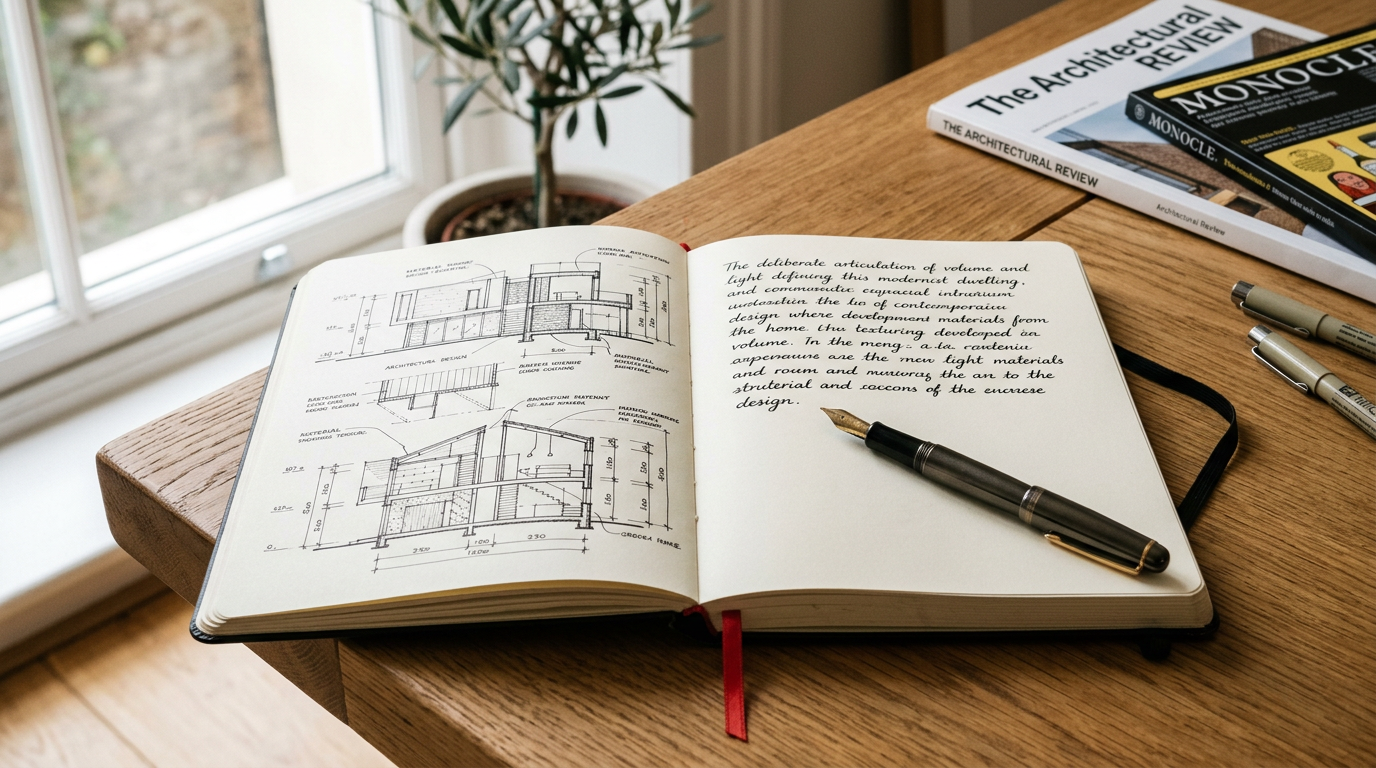
An architect’s primary tools are software and sketchpads, not word processors. Yet the most successful firms often have principals who are also prolific writers. They publish articles, contribute to journals, and share their insights widely. This is not a coincidence. It is a strategic advantage.
Writing is a powerful tool for clarifying your firm’s unique point of view. It forces you to articulate your design philosophy beyond project descriptions, moving from what you built to why you built it that way. For potential clients, this insight is invaluable.
Define Your Expertise
Every architecture firm has a unique perspective shaped by its projects, principals, and location. Writing gives you a platform to share that expertise with the world. A well-written article can establish your authority on a specific topic, whether it’s sustainable design, adaptive reuse, or innovative housing models.
This act of sharing knowledge does more than just build a reputation. It acts as a filter. It attracts clients who are already aligned with your approach and values. When a developer reads your piece on the challenges of urban infill, they understand your thought process before the first meeting is even scheduled. You are no longer just a vendor; you are a trusted expert.
Writing helps you move from being a service provider to being a partner in your client's- C-level strategic thinking.
Think of your articles as ambassadors for your practice. They can reach a far wider audience than your project portfolio alone. They work for you around the clock, drawing in right-fit clients who are actively seeking the specific knowledge you hold.
Connect With Your Ideal Client
Potential clients are searching for solutions. They might be homeowners researching kitchen renovations or business owners exploring commercial leaseholds. Your articles can meet them at the exact moment of their need, answering their questions and easing their anxieties.
An article titled "What to Expect When Hiring an Architect for the First Time" can demystify the process for a homeowner. A piece on "The Future of Workplace Design" can capture the attention of a CEO planning a new headquarters. These articles build trust and rapport before you ever shake hands.
Consider the following content areas:
- Process: Explain your firm's approach to design, from initial concept to construction administration.
- Problem-Solving: Detail how you resolved a particularly complex design challenge on a past project.
- Philosophy: Discuss your firm's core beliefs about the role of architecture in the world.
- Project Case Studies: Go beyond the glossy photos and explain the why behind the design choices. What problems did the client have? How did your design solve them?
This content serves the dual purpose of educating your audience and showcasing your firm's unique value proposition. It is marketing that does not feel like marketing.
Speaking Their Language
When writing for clients, avoid industry jargon. The goal is to be clear and helpful, not to impress other architects. Explain complex ideas in simple terms. Use analogies. Tell stories. A client who feels understood is a client who is ready to collaborate.
Your written voice should mirror your firm's brand. Are you technical and precise? Warm and approachable? Bold and experimental? Let that personality shine through in your writing.
Sharpen Your Own Thinking
The process of writing is also a process of discovery. It forces you to organize your thoughts, question your assumptions, and refine your ideas. Many architects find that writing about their work leads to new insights and a clearer, more focused design philosophy.
Putting your ideas into words makes them real and testable. As you draft an article about your approach to materiality, you may find yourself articulating a concept you had only intuitively understood before. This newly clarified idea can then inform your future design work and strengthen your firm's identity.
This internal benefit is just as valuable as the external one. A firm that continuously refines its thinking is a firm that is poised for growth and innovation. Writing is a catalyst for that evolution.
Build a Lasting Asset
Unlike a social media post that disappears in a day, a well-researched article is a long-term asset. It can live on your firm's website for years, attracting traffic from search engines and providing a valuable resource for potential clients. It is a piece of intellectual property that works for you indefinitely.
These articles can be repurposed into other formats:
- Presentations: A series of articles can form the basis of a talk for an industry conference.
- Newsletters: Share your latest articles with your email list to stay top-of-mind.
- Social Media: Pull key quotes and insights from your articles to create engaging posts.
- E-books: Compile several related articles into a comprehensive guide for lead generation.
By building a library of insightful content, you are creating a durable marketing engine for your firm. You are investing in a foundation of expertise that will pay dividends for years to come.
How to Get Started
The prospect of writing can be daunting, but it does not have to be. Start small. Commit to writing one article a quarter, or even just one every six months. The key is to be consistent.
Choose a topic you are passionate about and that you know well. Do not try to be an expert on everything. Focus on your niche. Your unique experience is your greatest asset. What problems do you solve for clients better than anyone else?
Do not worry about perfection in the first draft. Just get your ideas down. You can always revise and edit later. The most important step is simply to begin. The more you write, the easier it becomes, and the more you will see the tangible benefits for your practice.
Writing is a marathon, not a sprint. But for architecture firms looking to differentiate themselves, build authority, and connect with clients in a meaningful way, it is a race worth running. If you are ready to find a firm that aligns with your project's goals, you can start by exploring architects on EJAL.
More from Ejal Insights
- Beyond Green: The Rise of Carbon Accounting in Architecture
- Beyond the Building Shell: How Interior Architecture Shapes Experience
- Beyond the Façade: When Is Adaptive Reuse the Right Choice?
- The Great Divide: How Modern Life Is Splitting the Single-Family Home
- Your Firm's Website Is a Product. Treat It Like One.
- Beyond Green: How Restorative Design Can Heal People and Planet