Clerestory Windows: The Secret to Light-Filled Modern Homes
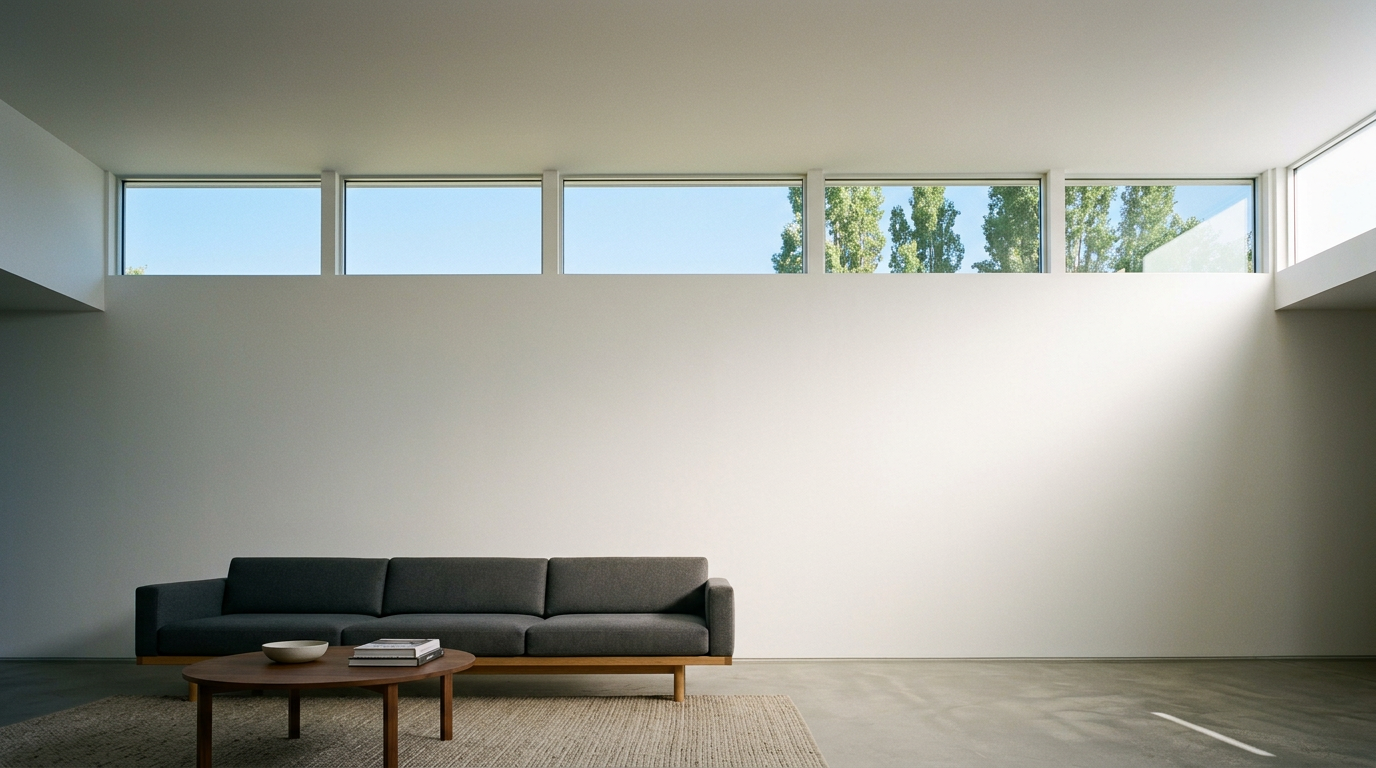
A wall of glass is the obvious way to capture a view. But what if the best view is straight up? Clerestory windows, those high bands of glass set near the roofline, are a defining feature of modern architecture that solve complex design problems with simple, elegant geometry.
These windows are not just for show. They are strategic tools. By lifting the eye and pulling in daylight from above, they create spaces that feel brighter, more open, and more private than those relying on conventional window placements alone. For homeowners and developers, they offer a sophisticated solution to common site challenges.
Light Without Sacrificing Privacy
One of the most compelling reasons to use clerestory windows is their ability to flood a room with light without exposing the interior to the street or a close neighbor. Standard windows create a direct line of sight, forcing a choice between natural light and privacy, often resolved with curtains or blinds.
Clerestory windows eliminate this trade-off. Placed high on a wall, they allow sunlight to pour in throughout the day while keeping the living space completely shielded from outside view. This makes them ideal for bedrooms, bathrooms, and any room facing a busy street or an adjacent property, creating a sanctuary of light.
The Dynamics of Natural Light
Clerestory lighting is different. It is indirect, diffuse, and constantly changing. Depending on the home's orientation, these high windows can capture the soft, cool light of the morning from the east or the warm, dramatic light of the late afternoon from the west. This shifting pattern animates the interior.
By positioning clerestory windows to face south, a home can also benefit from passive solar gain in the winter, when the sun is lower in the sky. An appropriate roof overhang can then block the high summer sun, reducing cooling costs.
This strategic use of daylighting does more than just lower electricity bills. It enhances the perceived volume of a space, making ceilings feel higher and rooms feel larger than they are. The quality of the light itself, washing down a wall or across a ceiling, becomes a dynamic architectural finish.
Architectural and Spatial Definition
Beyond light, clerestory windows are a powerful tool for shaping space. They can be used to create a visual separation between a wall and the roof, making the roof plane appear to float. This simple move adds a sense of lightness and sophistication to a structure, a hallmark of thoughtful modern design.
In open-plan homes, a change in ceiling height marked by a band of clerestory windows can define a specific zone, like a dining area or a reading nook, without adding walls. This preserves the open feeling while creating more intimate, human-scaled spaces within the larger volume.
They also provide a unique opportunity to frame views that would otherwise go unnoticed:
- Sky: A simple, ever-changing view of the clouds and sky.
- Treetops: Capturing the rustling leaves of nearby trees, bringing a connection to nature deep into the home.
- Architectural Details: Highlighting the texture of a brick chimney or the silhouette of a neighboring roofline.
Practical Considerations for Design and Construction
While the aesthetic benefits are clear, implementing clerestory windows requires careful planning. They are an integral part of the home’s structure, not an afterthought. Key considerations include the building envelope, thermal performance, and operation.
- Structural Integration: The wall framing, headers, and roof structure must be engineered to accommodate the long, narrow openings. Working with an architect ensures this is handled correctly from the start.
- Thermal Performance: As with any window, energy efficiency is critical. Specify high-performance glazing, such as double or triple-pane units with low-emissivity (Low-E) coatings and argon gas fills, to minimize heat loss in winter and heat gain in summer.
- Operability: Will the windows be fixed or operable? Operable clerestory windows, though more complex, can significantly enhance natural ventilation. Warm air, which naturally rises, can escape through the high openings, drawing cooler air in through lower windows. This effect, known as stack ventilation, can dramatically reduce the need for air conditioning.
A Timeless Modern Strategy
From the sunlit halls of ancient Egyptian temples to the work of modern masters, clerestory windows have a long history of solving for light and air. In contemporary residential design, they remain one of the most effective strategies for creating homes that are bright, private, and connected to the world above.
Ultimately, the use of clerestory windows is a testament to the idea that the best design solutions are often the simplest. By looking up, architects, developers, and homeowners can unlock a powerful tool for crafting spaces that are not only beautiful but also deeply responsive to both their site and their inhabitants.
More from Ejal Insights
- Beyond Green: The Rise of Carbon Accounting in Architecture
- Beyond the Building Shell: How Interior Architecture Shapes Experience
- Beyond the Façade: When Is Adaptive Reuse the Right Choice?
- The Great Divide: How Modern Life Is Splitting the Single-Family Home
- Your Firm's Website Is a Product. Treat It Like One.
- Beyond Green: How Restorative Design Can Heal People and Planet