The Greenest Building Is One That Already Exists
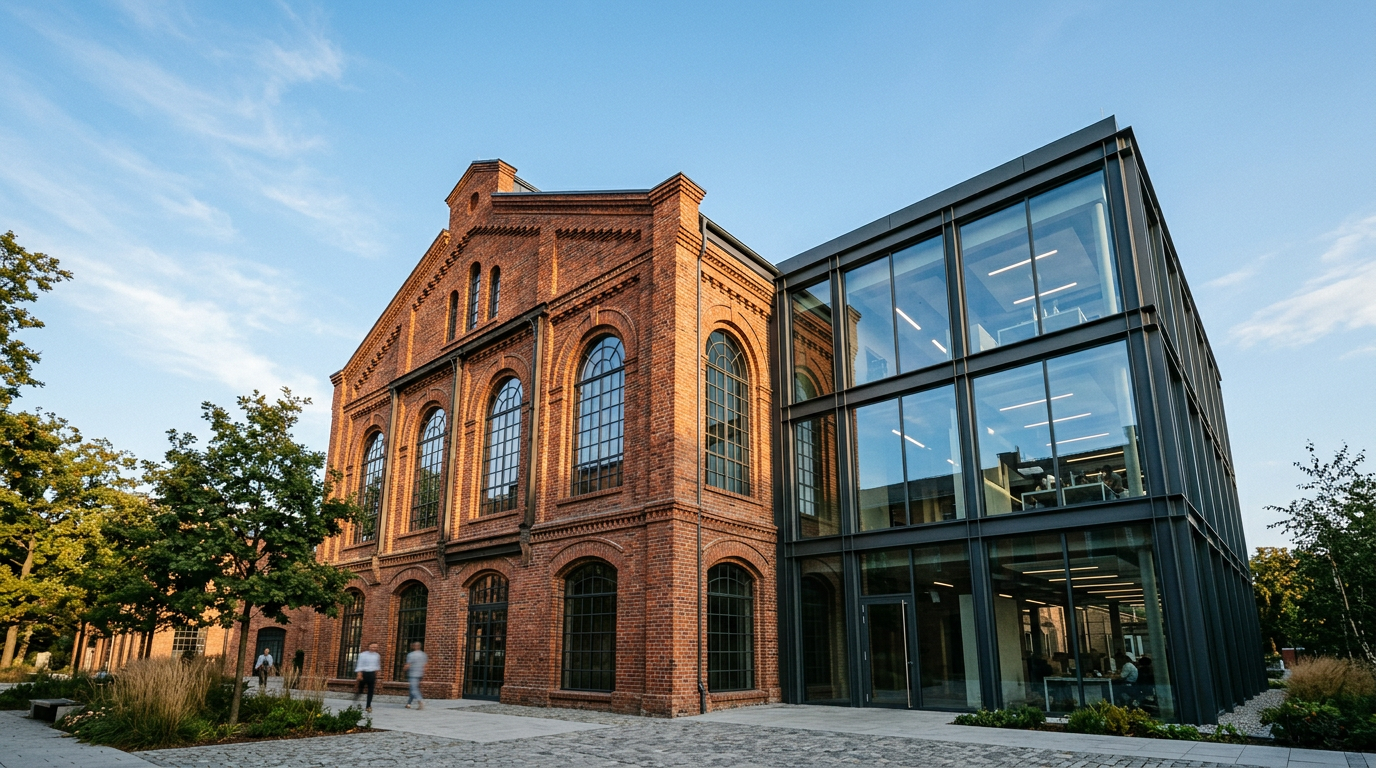
The conversation around sustainable architecture often focuses on high-tech materials and energy-efficient systems in new buildings. But what if the most significant environmental contribution comes not from what we build, but from what we choose not to demolish? The practice of historic preservation is a powerful act of sustainability.
Every existing building represents a massive upfront investment of carbon, known as embodied carbon. This is the sum of all greenhouse gas emissions associated with a building's lifecycle, from raw material extraction and manufacturing to transportation and construction. When we tear down a structure, all that embodied carbon is wasted, and a new carbon debt is incurred to create its replacement. Recognizing this simple fact reframes preservation as a critical climate action.
Understanding Embodied Carbon
Embodied carbon is the hidden environmental cost of construction. Unlike operational carbon, which is the energy used to heat, cool, and power a building once it's occupied, embodied carbon is spent before the lights are even turned on. It accounts for a significant portion of a building's total lifetime emissions, often estimated to be between 30% and 70%.
Key sources of embodied carbon in a typical building project include:
- Concrete: The production of cement, its key ingredient, is incredibly energy-intensive.
- Steel: Manufacturing steel requires smelting iron ore at very high temperatures.
- Aluminum: The production process for architectural aluminum is highly consumptive of electricity.
- Transportation: Moving heavy materials from factories to construction sites burns fossil fuels.
By preserving an existing structure, we avoid releasing the carbon associated with demolishing the old and producing materials for the new. This act of conservation has an immediate positive impact, one that can take a new, energy-efficient building decades to pay back through operational savings.
Preservation as a Climate Strategy
Reusing a building is the ultimate form of recycling. The environmental benefits go far beyond just saving a piece of history; they represent a tangible strategy for reducing greenhouse gas emissions. For developers and homeowners alike, the choice to renovate instead of rebuild is a direct investment in a lower-carbon future.
The greenest building is truly the one that is already standing. This principle challenges the industry to shift its focus from a cycle of demolition and new construction to one of thoughtful adaptation and reuse.
This approach doesn't mean that new construction is always wrong. But it does demand a more rigorous evaluation of what already exists. Before defaulting to a blank slate, project leaders should ask critical questions. Can this structure be adapted? Can its core and shell be repurposed? Can its materials be salvaged? Often, the answer is yes, and the environmental savings are substantial.
The Role of the Architect in Adaptive Reuse
Architects are central to unlocking the potential of existing buildings. The work requires a different skillset than designing from scratch. It involves investigation, problem-solving, and a deep respect for the building's original character and material integrity. It is a process of creative subtraction and addition, rather than creation from whole cloth.
Successful adaptive reuse projects demonstrate that old buildings can be transformed to meet modern needs without sacrificing their soul. Architects achieve this through several key actions:
- Thorough Assessment: Conducting a detailed analysis of the building's structural soundness, material condition, and hazardous materials.
- Creative Problem-Solving: Finding innovative ways to insert modern systems like HVAC, data cabling, and insulation without destroying historic fabric.
- Material Expertise: Understanding how historic materials like old-growth timber, lime plaster, and early masonry behave and how to best repair or complement them.
- Code Navigation: Expertly navigating building codes that were written for new construction, finding equivalent safety solutions that respect the historic structure.
For architecture firms, developing a specialization in historic preservation and adaptive reuse is not just about honoring the past. It is about positioning themselves at the forefront of sustainable design.
Beyond Carbon: The Human-Centered Benefits
While the embodied carbon argument is compelling, the benefits of preservation extend to the human and cultural realms. Historic buildings connect us to a place's story. They provide texture, scale, and a sense of identity that is difficult to replicate with new construction. They are landmarks that orient us and enrich our daily lives.
Neighborhoods with a mix of old and new buildings are often perceived as more authentic and desirable. For businesses, a location in a thoughtfully renovated historic building can be a powerful differentiator, signaling stability, character, and a commitment to the community. For homeowners, it is an opportunity to live within a piece of history, with craftsmanship and materials that are often irreplaceable.
Making Preservation a Priority
To make adaptive reuse the norm rather than the exception, a collective effort is needed. Municipalities can streamline approvals for renovation projects and offer incentives like tax credits. Developers can adjust their financial models to better account for the long-term value of reused assets. Architects can continue to champion the design possibilities inherent in our existing building stock.
Choosing to preserve a building is a forward-looking decision. It acknowledges the resources already invested and avoids the immense environmental cost of starting over. By seeing existing structures not as obstacles but as assets, we can build a more sustainable and more interesting world, one thoughtful renovation at a time. The most innovative act of design may just be to appreciate what is already there.
More from Ejal Insights
- Beyond Green: The Rise of Carbon Accounting in Architecture
- Beyond the Building Shell: How Interior Architecture Shapes Experience
- Beyond the Façade: When Is Adaptive Reuse the Right Choice?
- The Great Divide: How Modern Life Is Splitting the Single-Family Home
- Your Firm's Website Is a Product. Treat It Like One.
- Beyond Green: How Restorative Design Can Heal People and Planet