Soft Skills in Architecture: Why Your Architect’s People Skills Matter
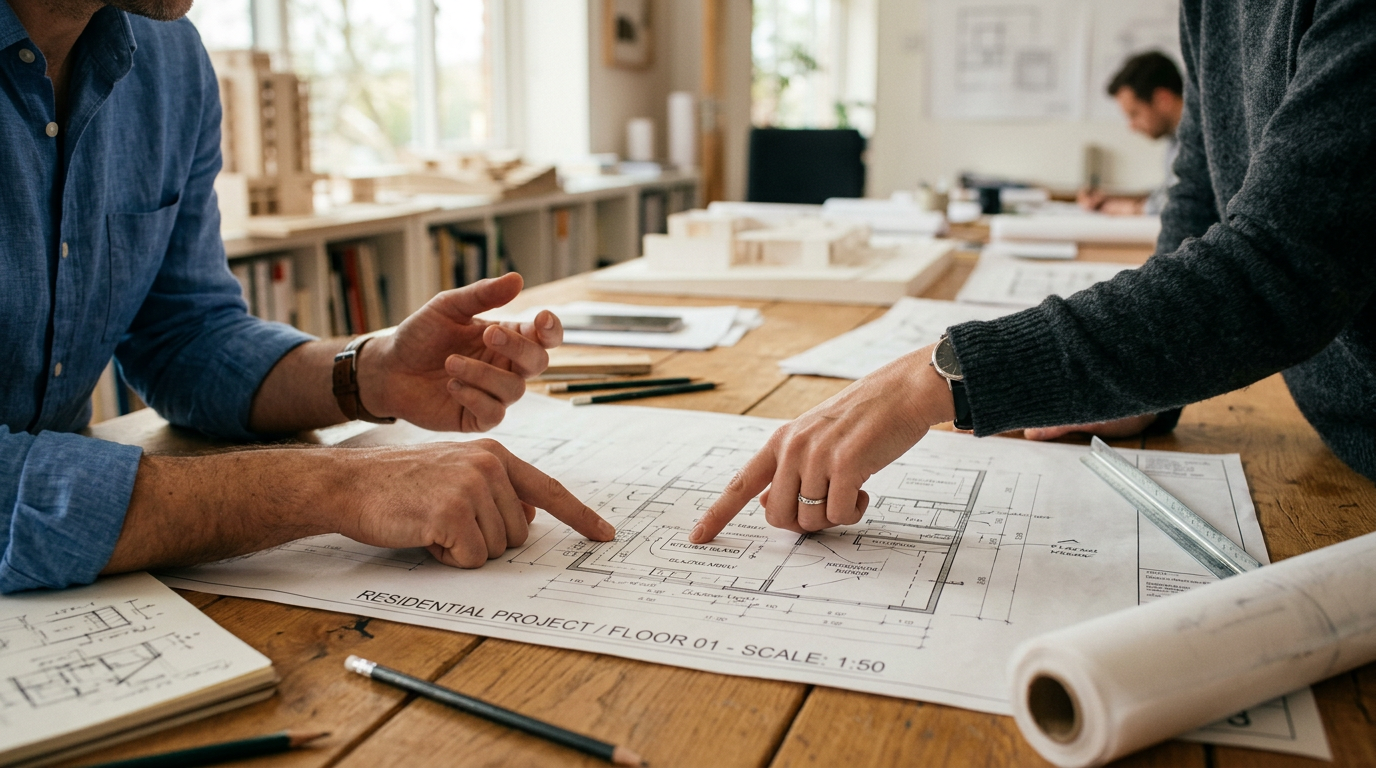
Your architect’s portfolio is stunning. The technical drawings are precise. But what about their ability to listen, to mediate, to clearly explain complex ideas? These soft skills are often the crucial, overlooked ingredients that determine a project’s ultimate success, ensuring the process is as sound as the structure itself.
Great design is a given. It is the entry ticket for any architect under serious consideration. However, the journey from initial concept to finished building is a human one, filled with negotiation, interpretation, and collaboration. Without strong people skills, even the most brilliant technical architect can lead a project into delays, budget overruns, and frustration.
Communication is the Foundation
Before a single line is drawn, the process begins with conversation. The quality of that dialogue sets the tone for the entire project. An architect must be able to translate your goals, needs, and even your unspoken assumptions into a viable design concept. This requires more than just good hearing; it requires active listening.
Look for an architect who does the following:
- Asks clarifying questions: They dig deeper than your initial requests to understand the why behind the what.
- Paraphrases your ideas: They repeat your goals back to you in their own words to ensure there are no misunderstandings.
- Explains complex topics simply: They can discuss zoning codes, structural requirements, or material specifications without resorting to impenetrable jargon.
A project’s success often hinges not on solving a design problem, but on ensuring everyone understands the solution in the same way. Miscommunication is the most expensive mistake.
Navigating the Human Element
An architect doesn’t work in a vacuum. They are the central hub connecting a diverse group of people: clients, contractors, engineers, zoning officials, and neighbors. Each party has its own priorities, communication style, and potential for conflict. Your architect acts as the project’s diplomat and director.
This role is part leadership, part negotiation, and part therapy. When a contractor disputes a design detail, or a planning board official raises an objection, it is the architect who must step in to find a resolution. Abrasive, arrogant, or poor communicators can turn minor issues into major battles, creating an adversarial environment that poisons the project and invites costly delays.
What to Look For
During your initial conversations, pay attention to how the architect describes their past projects. Do they talk only about the design, or do they mention the team?
- Praise for others: Do they speak highly of contractors and consultants they’ve worked with? It suggests they build and maintain positive relationships.
- Stories of solved problems: Ask them about a time a project went wrong. A good architect will have a story about navigating a challenge through clear communication and creative problem-solving, not by blaming others.
- Calm and collected demeanor: A high-pressure project needs a steady hand. An architect who is easily flustered or overly defensive in an interview will likely be the same under construction pressure.
Empathy: Designing for People
Ultimately, architecture is for people. A truly great architect designs with empathy, putting themselves in the shoes of the people who will live, work, or interact with the building. This goes beyond simply meeting the functional requirements of a space. It’s about understanding how a space will feel.
Does the layout of a home’s kitchen support the morning rush of a family? Does the flow of an office encourage both collaboration and focused work? An empathetic architect anticipates the needs of the end-user. This quality is difficult to see in a portfolio, but it is revealed in the questions they ask and the way they speak about their past work.
The Business of Design
Beyond the creative and interpersonal aspects, a successful project is also a business venture. Your architect must demonstrate a respect for your budget and timeline. This is another area where soft skills are paramount. It requires organization, transparency, and the ability to have difficult conversations.
An architect with strong business acumen will:
- Be upfront about costs: They will provide clear fee structures and be realistic about construction costs from the beginning.
- Manage expectations: They will communicate proactively about potential budget impacts or schedule delays, providing solutions rather than excuses.
- Act as a steward of your resources: They treat your money with the same care they would their own, always seeking value and efficiency.
When choosing your architect, look beyond the pretty pictures. The most beautiful design in the world is meaningless if it cannot be built on time, on budget, and with your sanity intact. The soft skills are the essential framework that supports the entire process. A great architect designs a great building, but an exceptional architect guides a great experience, leaving you with a building you love and a process you can look back on with confidence.
For more guidance on finding the right firm for your project, the resources at EJAL.com can help you get started. Search for architects in your city.
More from Ejal Insights
- Beyond Green: The Rise of Carbon Accounting in Architecture
- Beyond the Building Shell: How Interior Architecture Shapes Experience
- Beyond the Façade: When Is Adaptive Reuse the Right Choice?
- The Great Divide: How Modern Life Is Splitting the Single-Family Home
- Your Firm's Website Is a Product. Treat It Like One.
- Beyond Green: How Restorative Design Can Heal People and Planet