Architect vs. Design-Build Firm: Which Is Right for You?
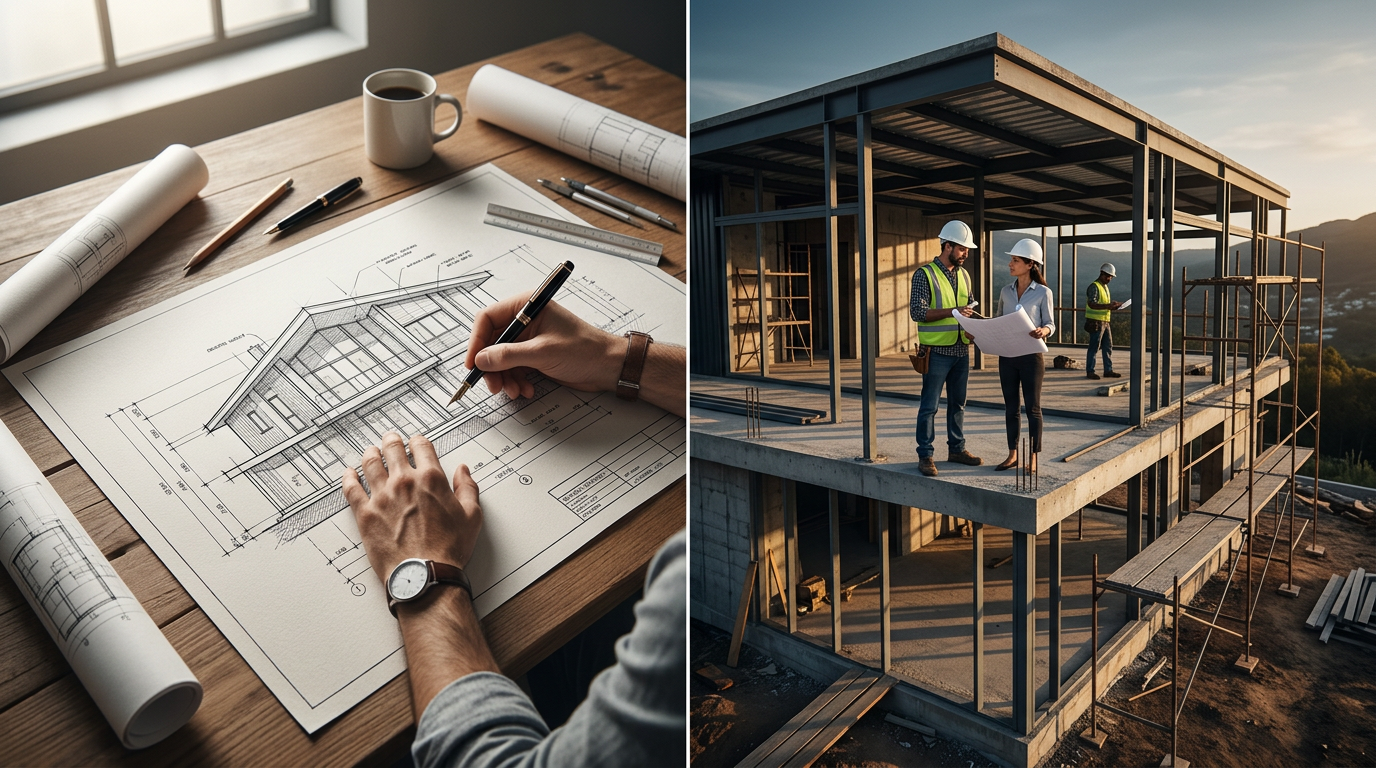
Choosing your project team is one of the most consequential decisions you will make. The choice between hiring an architect and contracting with a design-build firm defines the path forward, shaping everything from design control and budget management to the finished building itself.
Each approach offers a distinct process. Understanding the core differences is the first step toward a successful project, whether it's a custom home, a commercial development, or a sensitive renovation.
The Traditional Model: Design-Bid-Build
The classic approach involves hiring an architecture firm first. You work with the architect to develop a complete design, including detailed drawings and specifications. This set of documents, called construction documents, becomes the basis for seeking competitive bids from general contractors.
In this model, the architect acts as your direct agent and advocate. The relationship is linear. First you design, then you bid, then you build. Your primary relationship is with the architect, who oversees the contractor to ensure the work aligns with the design intent.
Key Characteristics
- Separate Entities: The architect and contractor are separate companies with separate contracts. You, the owner, hold contracts with both.
- Upfront Design: The design is fully completed before any construction pricing is solicited.
- Competitive Bidding: Multiple general contractors can bid on the exact same set of plans, which can theoretically drive down costs.
The Integrated Model: Design-Build
A design-build firm offers a single point of contact for both design and construction. Architects, engineers, and construction professionals all work for the same company under one contract. This integrated team collaborates from the very beginning.
This model is built on communication and collaboration between the design and construction sides of the house. From the earliest sketches, the construction team provides input on cost and constructability, which can streamline the process and help manage the budget from day one.
Key Characteristics
- Single Contract: You sign one contract with one firm for the entire project, from concept to completion.
- Team Collaboration: Designers and builders work together from the start, influencing the design with real-world cost and scheduling information.
- Overlapping Phases: Design and construction phases often overlap, which can accelerate the project timeline.
Comparing Key Differences: Architect vs. Design-Build
Deciding which path is right for your project requires weighing the trade-offs. The best fit depends on your priorities regarding creativity, budget, risk, and your own level of involvement.
Design Control and Creativity
If your highest priority is a unique, highly customized design, the traditional architect-led model often provides the most creative freedom. The architect is singularly focused on realizing your vision and is not constrained by the preferences or systems of an in-house construction team.
Design-build can also produce stunning architecture. However, the design process is inherently interwoven with budget and construction methods from the start. This can be an advantage for cost control but might temper the purely creative exploration phase.
Budget Management and Cost
The design-build model often provides greater cost certainty earlier in the process. Because the contractor is involved from day one, budgets are developed in tandem with the design. This reduces the risk of completing a full set of drawings only to find out that the project is over budget.
In the traditional design-bid-build process, the true cost is unknown until the bidding phase is complete. This can lead to surprises and may require costly redesigns to meet the budget.
With the architect-led model, competitive bidding can potentially secure a lower price. However, if bids come in too high, the project must be redesigned, which costs time and money. There is less real-time feedback on how design decisions impact the final cost.
Accountability and Risk
Accountability is a major differentiator. When an issue arises in a design-build project, there is only one company to call. The single entity is responsible for both the design and its execution, eliminating the potential for disputes between the architect and the builder.
In the traditional model, the owner manages two separate contracts. If a problem occurs, the architect might blame the contractor's execution, and the contractor might blame the architect's plans. This can place the owner in the difficult position of mediating disputes.
Project Complexity and Flexibility
For highly complex or technically challenging projects, having an independent architect as your advocate can be a significant advantage. The architect's sole allegiance is to you and the project's quality, providing a crucial layer of oversight.
However, design-build offers more flexibility to make changes during construction. Because the design and construction teams are integrated, they can more easily collaborate on solutions and adapt to unforeseen site conditions or owner-requested modifications.
Who Is It For?
So, which model makes the most sense for you? It boils down to your specific project goals and your comfort level with the process.
- Choose an Architect if: You prioritize a highly specific or unique design, want an independent advocate working exclusively for you, and are comfortable with a more linear, phased process.
- Choose a Design-Build Firm if: You prioritize speed, cost certainty, and a single point of responsibility. This model is often a great fit for clients who prefer a more streamlined, hands-off experience.
Ultimately, there is no single right answer. Both architect-led and design-build approaches have produced countless successful projects. The key is to understand the fundamental differences in relationships, responsibilities, and process. By aligning your project goals with the right delivery model, you set the stage for a smoother journey and a better outcome. To find a firm that matches your needs, you can start your search on EJAL.
Ready to take the next step? Find architects on EJAL.
More from Ejal Insights
- Historic Renovation: The Building Physics of Survival
- How to Choose the Right Architect Beyond the Portfolio
- Designing for Acoustic Comfort in Modern Homes
- The End of the Open Plan? How Post-Pandemic Design Is Shaping the Modern Home
- The Hidden Language of Materials in Modern Home Design
- Beyond Decoration: How Interior Architecture Shapes Experience