Beyond the Window: How Architects Use Borrowed Light
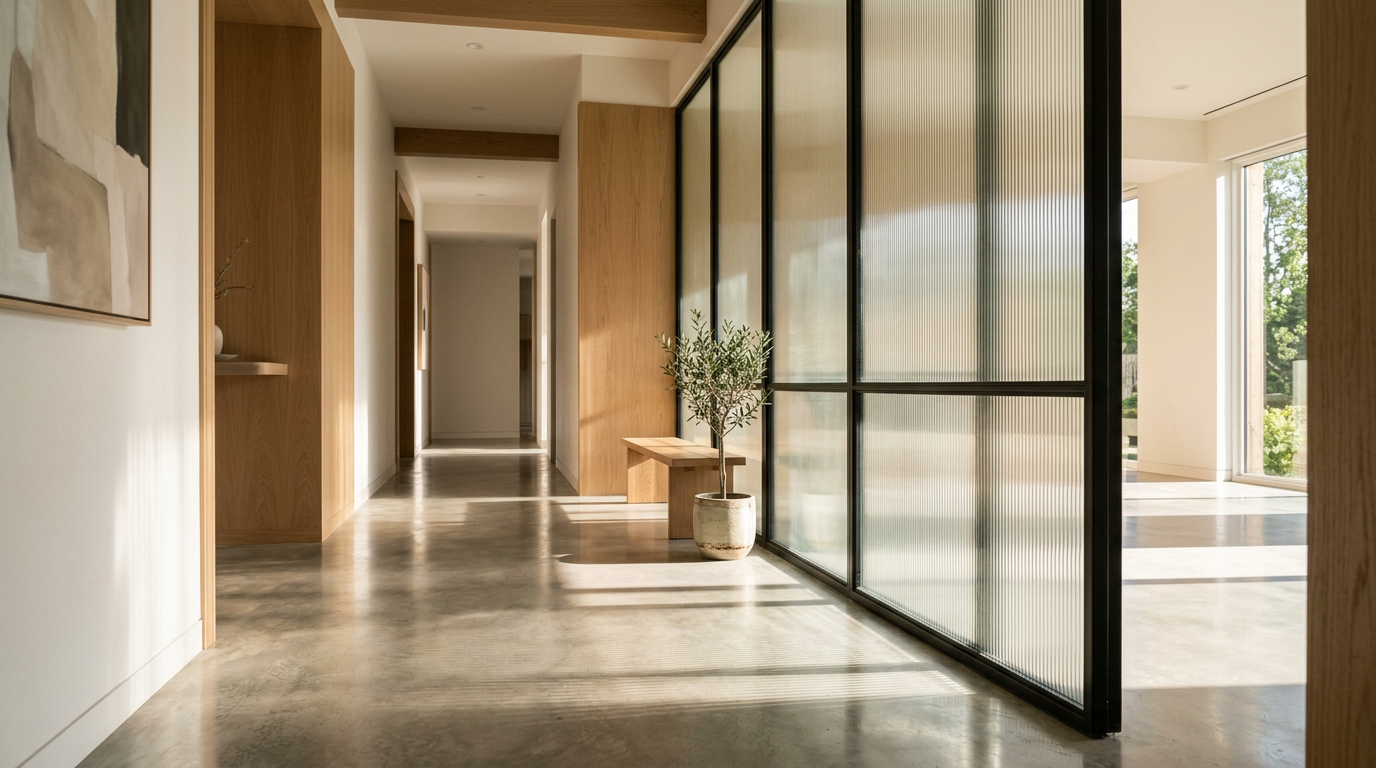
Every building has them. The windowless bathroom, the long central hallway, or the office buried deep in the core of the floor plan. These spaces often feel confined and stagnant. The common solution is to add more light fixtures, but an architect thinks about the problem differently, using a strategy called borrowed light.
This thoughtful approach is about more than just illumination. It is the art of guiding daylight, or even high quality artificial light, from a bright room into an adjacent, darker one. It transforms the feel of a space, making it feel larger, more open, and more connected to the rest of the building.
What is Borrowed Light?
Borrowed light is an intentional design strategy that channels light through a building’s interior. Instead of relying on solid, opaque walls to divide every room, architects create carefully placed openings and use translucent or transparent materials to share light between spaces. A solid wall stops light, but a glazed partition can share it while still providing acoustic or visual privacy.
This is not a new concept. Think of the transom windows above the doors in older homes, designed to let light and air flow through upper floors. Today, the materials and methods are more advanced, but the principle is the same. It is a fundamental tool for creating bright, pleasant interiors, even in deep or complex floor plans.
Good design is not just about how a space looks, but how it feels. Light is a primary driver of that feeling, turning a functional box into a place of comfort and clarity.
By planning for light to move through the interior, an architect can craft a richer and more dynamic spatial experience. It is a solution that feels both simple and profound, solving practical problems of darkness while elevating the building’s atmosphere.
The Architect’s Toolkit for Moving Light
Creating pathways for light requires a specific set of tools and techniques that go far beyond a standard window placement. These elements are integrated into the architecture itself, working with the flow and structure of the building. Architects mix and match these strategies to fit the project’s specific needs.
Key methods include:
- Internal Windows: A window does not have to look outside. Placing a window between an office and a corridor, or between a kitchen and a living area, shares light between the two. Clerestory windows, which are short, wide windows set high up on a wall, are particularly effective. They allow light to pass over furniture and heads, preserving privacy below while brightening two spaces at once.
- Glazed Partitions: These are essentially walls made of glass. They are extremely effective in office environments, where they can create separate meeting rooms and private offices that still feel connected to the main space and its natural light. For homes, a frosted or reeded glass partition can separate a bathroom from a bedroom, adding a touch of elegance while sharing light.
- Transoms and Sidelites: A transom is a glass panel directly above a door, and a sidelite is a glass panel to the side of it. These are classic architectural elements that break up solid walls and allow light to spill from rooms into darker hallways. They maintain security and privacy while creating visual connections.
- Reflective Surfaces and Finishes: The journey of light does not stop after it passes through a glass panel. Architects carefully consider material palettes to carry it further. Polished concrete floors, high gloss paint, and strategically placed mirrors can bounce light deep into a room, multiplying the effect of a single light source.
Materiality Makes a Difference
The choice of glass itself is a critical design decision. It is not just about clear versus opaque. Reeded glass, with its vertical texture, provides privacy while creating beautiful, distorted patterns of light. Frosted glass offers a diffuse, even glow, softening the light that passes through. Even colored glass can be used to add a specific mood or character to a space.
These material choices are part of the architect’s craft. They allow for a finely tuned approach that balances the need for light with requirements for privacy, aesthetics, and sound separation.
Impact on Wellbeing and Usability
The benefits of borrowed light extend far beyond simply making a room brighter. Access to natural light has a measurable impact on our psychological and physiological health. It helps regulate our internal clocks, improves mood, and can even increase productivity.
In a commercial setting, this is a powerful tool for employee wellness. An office designed with borrowed light ensures that more workers have access to some form of natural light, not just those with a coveted window seat. This can lead to a more energetic, positive, and healthy work environment. For developers, apartments with bright, airy interiors command more interest than dark, cramped units.
For homeowners, the effect is just as important. A home filled with natural light feels more spacious and welcoming. A previously dark hallway becomes a pleasant transition space, and a windowless powder room can feel surprisingly open. By maximizing light, you maximize the usability and enjoyment of every square foot of your property.
Borrowed Light in Practice
The application of these techniques varies depending on the building type and the user’s needs. The strategy for a corporate headquarters will be different from that of a single family home, but the goals are often similar: improve the human experience.
In residential projects, borrowed light can solve common problems. In a narrow city townhouse, a central staircase with an open-tread design and adjacent glass panels can allow light from a skylight above to filter down through the core of the home. An ensuite bathroom can borrow light from the bedroom through a high clerestory window, making both spaces feel larger.
The strategy is essential in commercial and office design. Here, deep floor plates often mean large areas are far from any windows. An architect might use a "main street" concept, a central corridor with glazed-front offices on either side, allowing light from the perimeter to reach the building’s core. This fosters a sense of community and transparency while delivering light to the masses.
Ask Your Architect About Light
Achieving effective borrowed light is not an accident. It is the result of careful planning and a deep understanding of how buildings are built and experienced. Adding an internal window is most effective when it is considered as part of a comprehensive design, not as a later renovation.
An architect can analyze the building’s orientation, map the path of the sun, and design a holistic system of openings and surfaces. They also understand the technical requirements, from the structural implications of creating an opening to the fire-rating codes that may apply to certain types of glass in commercial buildings.
When you begin an architecture project, do not just think about the rooms you need. Think about how you want them to feel. The next time you speak with an architect, ask them how they can use borrowed light to shape your space. The answer may be illuminating.
This deliberate and artful manipulation of light is a hallmark of great design. It is a reminder that the most powerful elements of architecture are often not what you see, but what they allow you to see.
More from Ejal Insights
- Historic Renovation: The Building Physics of Survival
- How to Choose the Right Architect Beyond the Portfolio
- Designing for Acoustic Comfort in Modern Homes
- The End of the Open Plan? How Post-Pandemic Design Is Shaping the Modern Home
- The Hidden Language of Materials in Modern Home Design
- Beyond Decoration: How Interior Architecture Shapes Experience