Design-Build vs. Architect: Which Is Right for You?
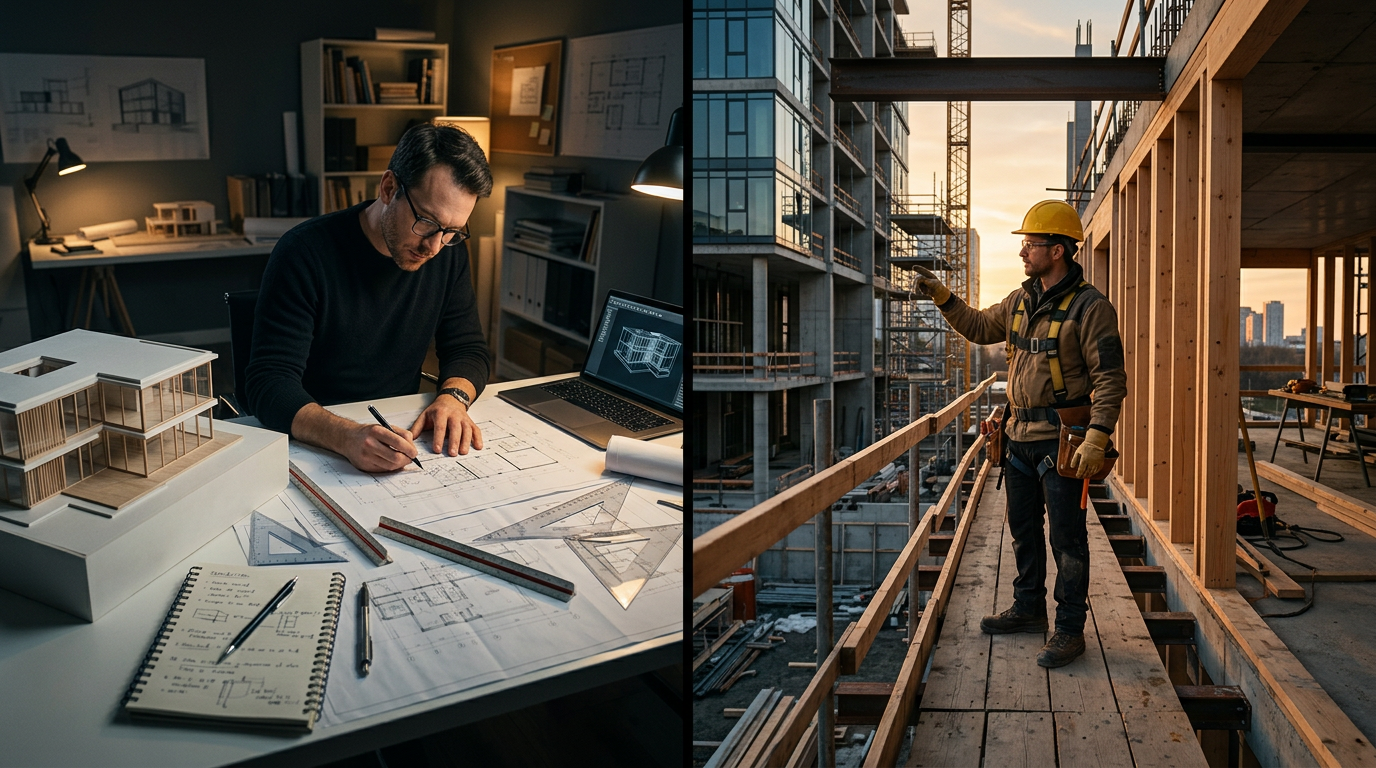
Choosing how to bring a building to life involves a critical early decision: selecting the right project delivery method. Do you hire an architect to design it and then find a builder, or hire a single firm to do both? This choice between the traditional model and design-build impacts everything.
The Traditional Path: Architect and Contractor
For centuries, the standard approach was clear. An owner hires an architect to create a full set of construction documents. These drawings and specifications form the basis for a competitive bidding process where general contractors submit their prices to build the project exactly as detailed.
This method, known as design-bid-build, is linear. The architect acts as your primary advocate and agent through the design and construction phases. They ensure the builder adheres to the plans and quality standards. It creates a system of checks and balances, with the architect and contractor operating as separate entities accountable to you.
Key features include a highly detailed design phase upfront, competitive cost discovery through the bidding process, and a clear separation of duties. This can be ideal for clients who want maximum control over the design details and a firm, fixed price before construction begins.
The Integrated Model: Design-Build
A design-build firm presents a different value proposition. It consolidates the design and construction services under one roof, with a single contract and a single point of responsibility. The architect and contractor are part of the same team, working together from the very start.
This integrated approach allows for more collaboration between the design and construction sides of the house. Budgeting happens in real-time as the design develops, a concept known as "designing to a budget." Construction can often begin earlier, with phases overlapping. For instance, foundation work might start while final interior details are still being designed.
This model prioritizes speed, collaboration, and accountability. A client has one person to call, and the internal team is responsible for resolving any issues that arise between the design intent and construction reality.
Key Differences for Clients
Understanding the core distinctions helps you align the project delivery method with your own goals for the project. Each path offers a unique set of advantages.
Project Timeline
The traditional route is sequential. Design is completed first, then bidding, then construction. This can result in a longer overall project timeline. Design-build allows for overlapping phases (fast-tracking), which can significantly shorten the schedule from concept to completion.
Budget and Cost Control
With a traditional model, you get a firm price after bidding is complete. However, if bids come in over budget, it may require significant redesign and delays. Design-build integrates cost estimating throughout the design process, which can help control the budget from day one and reduce the risk of major cost surprises.
Design Flexibility and Control
The architect-led model offers the owner maximum creative control and a dedicated advocate for their vision. You can hire any architect you want, based purely on their design portfolio. In a design-build firm, your choice of design aesthetic is limited to that firm's in-house style and capabilities.
The fundamental trade-off is often between the creative freedom of the traditional model and the efficiency of the integrated design-build process. Your project priorities will point the way.
Communication and Accountability
In the traditional model, you manage two separate contracts and may sometimes mediate between the architect and contractor. With design-build, you have one point of contact. This simplifies communication and streamlines accountability, as the design-build firm is solely responsible for the entire project.
Who is the Architect in a Design-Build Firm?
This is a common and important question. In a reputable design-build firm, the architectural services are led by a licensed architect, just as they would be in a traditional architecture firm. The primary difference is their employment status. They are an employee or principal of the design-build entity rather than an independent consultant you hire directly.
Before engaging a design-build company, always verify that their design team is led by a registered architect who is licensed in your state. This ensures they meet the legal and ethical standards required to design buildings and protect public welfare.
Which Model Fits Your Project?
Neither model is inherently superior, but one is likely a better fit for your specific project, personality, and priorities.
- The Traditional Model may be right for you if:
- You are working on a civic, institutional, or historic preservation project. - The design is highly complex, unique, or of primary importance. - You want to select your architect and contractor based on separate qualifications. - You prioritize having a firm, fixed price before starting construction.
- The Design-Build Model may be right for you if:
- Speed and a predictable timeline are your top priorities. - You have a clear budget and want to design to that number from the start. - You prefer a single point of contact and a streamlined communication process. - Your project is relatively straightforward, such as a tenant fit-out, a new custom home, or a commercial warehouse.
Ultimately, the choice in the design-build vs architect debate comes down to your priorities. By weighing the importance of design control, budget management, and project speed, you can select the path that best aligns with your vision for a successful outcome. When you are ready to explore your options, you can begin to connect with firms that fit your needs.
Ready to see which firms might be a fit for your project? Find the right partner by starting your search on EJAL.
Ready to take the next step? Find architects on EJAL.
More from Ejal Insights
- Beyond the Building Shell: How Interior Architecture Shapes Experience
- Beyond the Façade: When Is Adaptive Reuse the Right Choice?
- The Great Divide: How Modern Life Is Splitting the Single-Family Home
- Your Firm's Website Is a Product. Treat It Like One.
- Beyond Green: How Restorative Design Can Heal People and Planet
- Beyond the Facade: The Hidden Systems of Historic Renovations