The Disappearing Kitchen: A New Era of Integrated Living
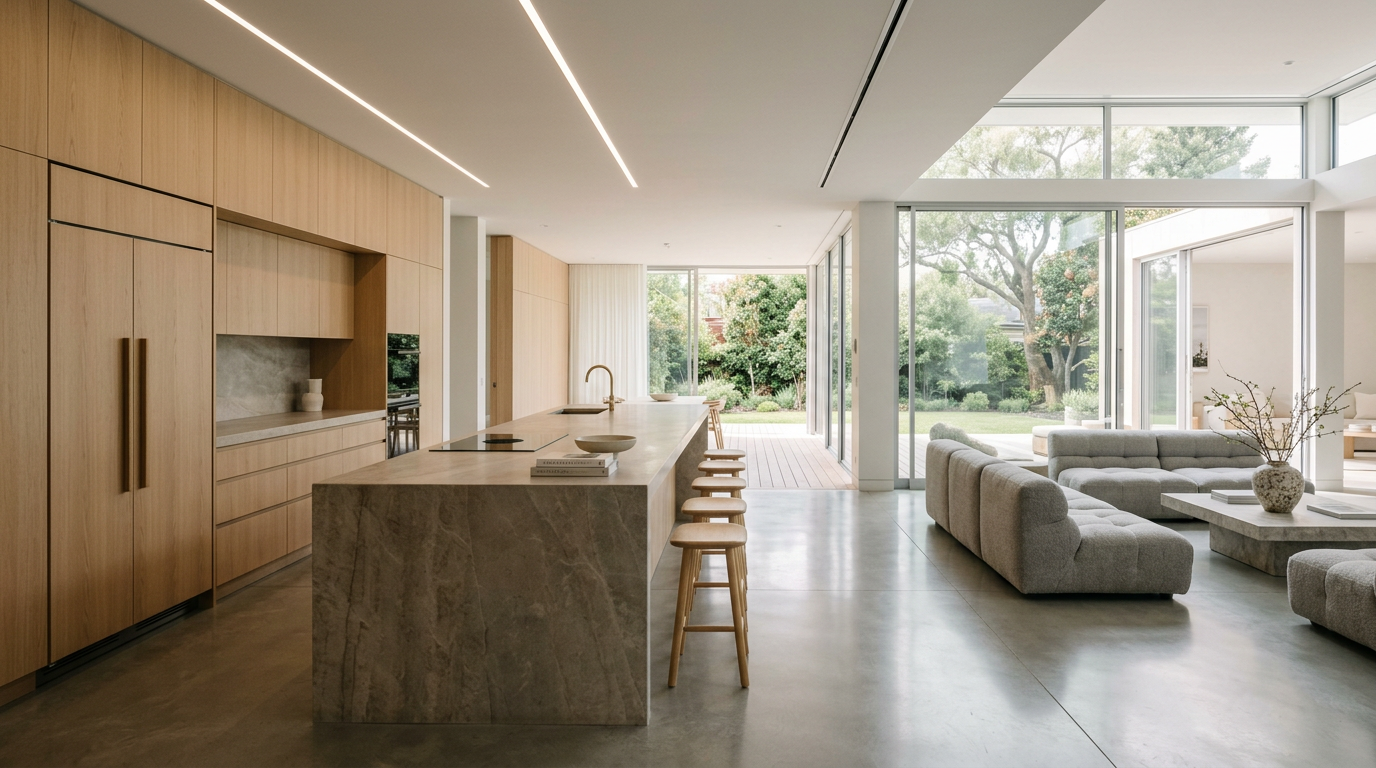
The kitchen is vanishing. Not the function, but the form. Architects are using innovative strategies to conceal appliances, integrate cabinetry, and blend the kitchen into the primary living space, making it disappear in plain sight. This approach redefines the heart of the home into a flexible, elegant area.
This shift responds to the enduring popularity of open-plan living. When the kitchen, dining, and living areas share one volume, a visually cluttered kitchen can disrupt the calm of the entire space. By treating the kitchen as a continuous part of the architecture, the home feels more cohesive, spacious, and serene.
From Open Plan to Integrated Space
The open-plan kitchen was a revolution, but the integrated kitchen is its quiet evolution. The goal is no longer just to remove walls but to erase the visual boundaries between cooking and living. This requires a deeper level of design thinking, where every element has a dual purpose.
Cabinetry becomes furniture. Appliances are hidden behind seamless panels. Countertops extend to become dining surfaces or workspaces. The result is a room that can host a dinner party one night and a client meeting the next morning without feeling compromised. It is the ultimate in flexible design.
Strategies for Concealment
Achieving a disappearing kitchen relies on clever design strategies that hide the functional components. Architects and designers use a variety of techniques to create a smooth, uninterrupted aesthetic that elevates the entire home.
Key methods include:
- Panel-Ready Appliances: Refrigerators, dishwashers, and even ovens are designed to be fitted with custom cabinet fronts. This allows them to blend perfectly with the surrounding millwork, removing the visual disruption of stainless steel.
- Appliance Garages: Toasters, blenders, and coffee makers are tucked away behind retractable or pocket doors. These "garages" keep countertops clear while ensuring everyday items are easily accessible.
- Integrated Sinks and Cooktops: Flush-mounted induction cooktops and sinks with covers or integrated cutting boards create a completely flat work surface when not in use. This transforms the kitchen island into a versatile table.
The Power of Material and Texture
Material continuity is fundamental to making the kitchen disappear. When the same flooring, wall finishes, and lighting extend from the living area into the kitchen, the space feels unified. This is a departure from the "feature kitchen" with its distinct tiles and finishes.
By wrapping the kitchen in the same architectural skin as the rest of the home, we turn a utility space into a living space. The focus shifts from the tools of cooking to the experience of gathering.
Texture plays a crucial role. A monolithic wall of floor-to-ceiling cabinetry, finished in a warm wood veneer or a matte lacquer, reads as an architectural element, not just a set of cupboards. This approach uses scale and simplicity to achieve a sense of calm and order. Fluted surfaces, subtle hardware, and continuous grain matching add tactile richness without creating visual noise.
Lighting as a Unifier
A cohesive lighting plan is the final touch. Instead of task lighting that screams "kitchen," architects use layered lighting that serves both function and ambiance. Dimmable, concealed LED strips can illuminate countertops for food preparation, while sculptural pendant lights over an island can create an intimate dining atmosphere. The lighting should feel as appropriate for watching a movie as it does for making a meal.
Benefits for Homeowners and Developers
This trend offers powerful advantages. For homeowners, the disappearing kitchen creates a more spacious and elegant living environment. It declutters the primary living zone, which is often the first thing a guest sees. This makes the home feel larger and more intentional.
For developers, offering integrated kitchen designs can be a significant market differentiator. It signals a commitment to high-end design and a modern understanding of how people live. In apartments and smaller homes where every square foot counts, a kitchen that blends away makes the entire unit feel more luxurious and functional.
Is the Disappearing Kitchen Right for You?
This architectural approach requires careful planning and a commitment to minimalism. It is not for everyone. A homeowner who loves the traditional, bustling look of a classic kitchen might find it too stark. However, for those who crave a serene, uncluttered, and flexible home, it is a powerful design solution.
Consider your lifestyle. Do you entertain often? Do you work from home? A kitchen that can transform its function on demand adds immense value. It allows a single, beautiful room to serve multiple needs, adapting to the rhythms of your daily life.
Ultimately, the disappearing kitchen is not about hiding a room we are ashamed of. It is about elevating the most functional part of our home into a seamless piece of architecture, creating a backdrop for a calmer, more connected life. By prioritizing cohesion and calm, architects are designing homes that are not just beautiful, but truly livable.
More from Ejal Insights
- Historic Renovation: The Building Physics of Survival
- How to Choose the Right Architect Beyond the Portfolio
- Designing for Acoustic Comfort in Modern Homes
- The End of the Open Plan? How Post-Pandemic Design Is Shaping the Modern Home
- The Hidden Language of Materials in Modern Home Design
- Beyond Decoration: How Interior Architecture Shapes Experience