The Right-Sized Home: A Modern Approach to Quality of Life
A large house sits on a quiet street, its many empty rooms a testament to a life that has changed. The kids are grown, careers have shifted, and the cavernous space now feels less like a trophy and more like a burden of upkeep. This scenario is a common catalyst for considering a smaller home.
But the most forward-thinking approach isn't just about shrinking your footprint. It's about redesigning it with intention. Welcome to the concept of "right-sizing," a philosophy that prioritizes a home built for your life as you actually live it, not a collection of rooms you think you need.
What is Right-Sizing?
Right-sizing is the thoughtful alignment of your living space with your lifestyle. It's a strategic process, not a reaction to a market trend. Unlike downsizing, which focuses almost exclusively on reducing square footage and cost, right-sizing is a qualitative assessment. It asks: how much space do we truly need, and how can that space perfectly support our lives?
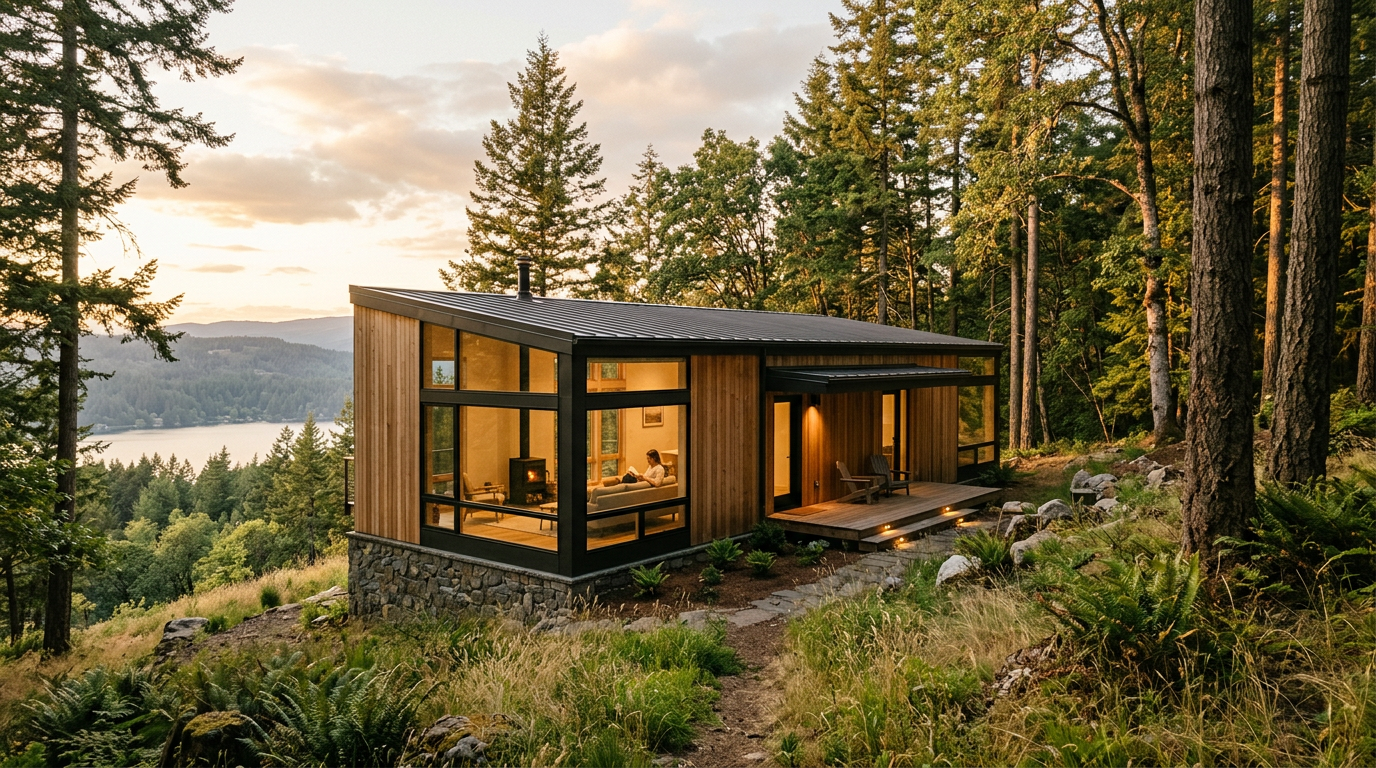
The result might be a smaller home. Often it is. But it could also be a home of the same size with a radically different layout, one that exchanges a formal living room for a larger kitchen and family area, or a spare bedroom for a dedicated workshop. It’s about utility and joy, not sheer volume.
The Financial Case for a Right-Sized Home
The economic benefits are about more than a smaller mortgage. A home tailored to your needs reduces financial friction at every level. While a lower purchase price is the most visible advantage, the savings compound over the entire life of the home.
Consider the long-term carrying costs. A right-sized home inherently requires less energy to heat and cool, leading to immediate and permanent reductions in utility bills. Property taxes and homeowners' insurance are often lower. And perhaps most significantly, the time and money spent on maintenance shrinks considerably.
This financial liberation has a profound impact. It frees up capital that can be invested, spent on travel, or directed toward other life goals. More importantly, it reduces the stress that comes with managing a property that has become a financial and logistical drain.
Quality Over Quantity
One of the most compelling arguments for right-sizing is the opportunity it creates for superior design and construction. When the budget isn't stretched to cover maximum square footage, resources can be reallocated to the things that truly elevate a living experience.
Imagine trading a rarely used fourth bedroom for custom millwork in the kitchen. Or swapping a sprawling, unused basement for triple-pane windows and a high-performance insulation system throughout the house. This is the core trade-off of right-sizing: you exchange excessive, low-quality space for a smaller amount of high-quality, perfectly appointed space.
This approach allows for better materials, finer craftsmanship, and the integration of features that provide daily delight. It is the architectural embodiment of choosing one perfect, handmade piece of furniture over a room full of disposable, mass-produced items.
Right-Sizing for a Sustainable Future
A home designed with intention is also a more sustainable home. Building smaller means consuming fewer raw materials from the outset. The construction process itself has a reduced environmental impact, from transportation emissions for materials to the energy used on the job site.
Over the long term, the sustainability benefits are even more pronounced. A compact, well-designed home is more energy-efficient by its very nature. The smaller building envelope is easier to heat, cool, and light. When combined with modern, energy-efficient systems and a focus on high-performance construction, the right-sized home is a powerful tool for reducing a household's carbon footprint.
How an Architect Helps You Right-Size
Achieving a truly right-sized home is not a simple matter of choosing a smaller floor plan. It requires a deep dive into your patterns of living, your daily routines, and your aspirations for the future. This is where a skilled architect becomes an invaluable partner.
An architect's first job is to listen. They conduct a process called architectural programming, which is a detailed analysis of a client's needs and goals. They ask the right questions to uncover how you really live, distinguishing between your perceived needs and your actual needs.
An architect does more than just draw. They help you clarify your vision and protect it. In the context of right-sizing, they are the critical partner who can translate your life into a floor plan, ensuring every square foot serves a purpose.
Through expert space planning, an architect can make a smaller home feel more generous and functional than a larger one. They use design strategies like borrowed light, open sightlines, and multi-functional built-ins to create a sense of spaciousness and utility that transcends mere dimensions. They are your best defense against building a home that does not truly fit.
Signs You Are 'Over-housed'
How do you know if right-sizing might be the right move for you? Consider if any of these common indicators resonate:
- Unused Rooms: You have one or more rooms, like a formal dining room or guest bedroom, that are used less than a handful of times per year.
- High Utility Bills: Your heating and cooling costs feel disproportionately high, even in mild seasons.
- Maintenance Burden: A significant portion of your weekend or your budget is consumed by home and yard maintenance.
- A Desire for Quality: You find yourself wishing for better finishes, fixtures, or furniture, but the budget is tied up in the sheer size of the property.
- Life Changes: Your family structure has changed through kids leaving for college, divorce, or retirement.
Right-sizing is not about sacrifice. It is the opposite. It is a deliberate choice to edit your life and your home down to its most essential and beautiful parts, creating a space that gives back more than it takes. It is the foundation for a life of intention, quality, and freedom. To find an architect who can guide you on this journey, start by exploring firms in your area.
More from Ejal Insights
- Historic Renovation: The Building Physics of Survival
- How to Choose the Right Architect Beyond the Portfolio
- Designing for Acoustic Comfort in Modern Homes
- The End of the Open Plan? How Post-Pandemic Design Is Shaping the Modern Home
- The Hidden Language of Materials in Modern Home Design
- Beyond Decoration: How Interior Architecture Shapes Experience