The Great Un-designing: Why the Future of Home Design Is Less
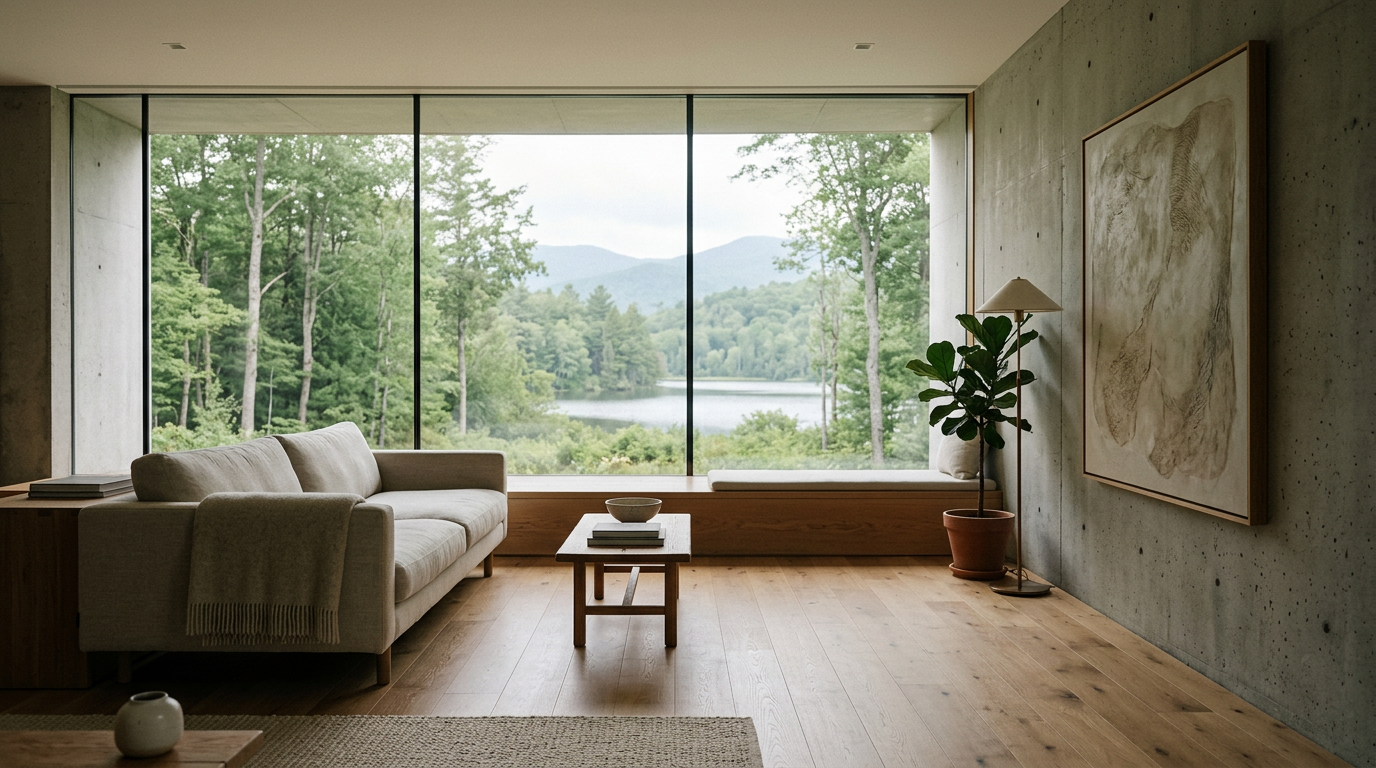
Faced with constant digital noise, homeowners are seeking refuge. They are commissioning homes that do less, but do it better. This is the great un-designing: a reductive approach that prioritizes serene, highly functional spaces by intentionally subtracting, simplifying, and decluttering from the very first sketch.
This trend is a direct response to a decade of feature-stuffing and overt displays. It suggests a growing desire for permanence and peace, a home that serves as a quiet backdrop to a full life, rather than a demanding object FILLED with things.
What is 'Un-designing'?
Un-designing isn't an absence of design. It is a rigorous and disciplined form of it. It is the conscious decision to remove elements until a space feels resolved, calm, and intuitive. This approach strips away visual noise to focus on the essential qualities of a home: light, volume, material, and flow.
Think of it as the architectural equivalent of a deep breath. Instead of adding more details, finishes, or rooms, the focus is on refining what remains. Every wall, window, and material choice must justify its existence. The result is a home that feels effortless and peaceful to inhabit.
Beyond Minimalism: Emotion and Function
While it shares DNA with minimalism, un-designing is less about a stark aesthetic and more about emotional and functional outcomes. Pure minimalism can sometimes feel cold or impersonal. Un-designing, however, is warm, tactile, and deeply human. It creates a supportive, not a demanding, environment.
The goal is to design a home that reduces cognitive load. You aren't bombarded with choices, patterns, or objects vying for your attention. This creates a sense of psychological ease that allows for genuine relaxation and connection with family.
A home should not be a checklist of features. It should be a framework for a better life. The best architecture often feels like it isn’t there, freeing the inhabitant to simply be.
The Floor Plan, Re-examined
The ubiquitous open-plan "great room" is being reconsidered. While it promotes togetherness, it can also become a chaotic, noisy single space for cooking, working, relaxing, and playing. Un-designing suggests a more nuanced approach, one that values both connection and separation.
This might mean creating distinct zones or rooms that can be opened to each other or closed off as needed. Think pocket doors, changes in ceiling height, or short corridors that create graceful transitions. The goal is a floor plan that supports various activities and moods simultaneously, providing both communal areas and places for quiet retreat.
Material Honesty and Reduced Palettes
Creating a calm interior landscape depends on a restrained and honest use of materials. Un-designing favors natural, durable materials that are beautiful in their own right and require little adornment. It’s about letting the inherent texture of wood, stone, or plaster provide the richness.
Key principles for materials in an un-designed home include:
- Reduced Palette: Using a limited set of complementary materials throughout the home creates a powerful sense of cohesion and tranquility.
- Honesty: Materials are presented as they are. Wood is oiled, not stained into oblivion. Concrete is sealed, not hidden under layers of paint. This celebrates imperfection and creates a more authentic space.
- Longevity: The focus is on materials that age gracefully, developing a patina over time. This is a move away from trendy finishes that will feel dated in a few years, making the home more sustainable.
Future-Proofing Through Simplicity
A simple, well-conceived home is an adaptable one. By avoiding hyper-specific solutions or built-in technology that will quickly become obsolete, an un-designed home is better prepared for the future. The open, uncluttered spaces can more easily accommodate life’s changes, from a growing family to aging in place.
When a home’s "good bones" provide the primary experience, it becomes a durable canvas. Furniture can be changed, art can be rotated, and new technologies can be added without requiring a major renovation. This built-in flexibility is perhaps the ultimate form of sustainable design. The most sustainable building is the one you don't have to tear down.
For Firms: Selling the Absence of 'More'
For architects and designers, communicating the value of "less" can be a challenge. Clients are often conditioned by media to want more features, more square footage, and more visible design moments. The key is to shift the conversation from a list of features to a discussion about how the home will feel and function.
Frame it as a luxury of subtraction. Explain that the calm and clarity of the finished home are the direct result of difficult, intentional decisions made during the design process. Help them understand that the empty space, the plain wall, and the simple detail are the most valuable parts of the design, earned through discipline and restraint.
Ultimately, un-designing is about designing a better state of mind. It’s a quiet revolution against "more" in favor of "enough." By subtracting the superfluous, architects can deliver their clients a home that is truly a sanctuary from the demands of the outside world.
More from Ejal Insights
- The Quiet Home: Solving the Acoustic Problem in Modern Design
- Historic Renovation: The Building Physics of Survival
- How to Choose the Right Architect Beyond the Portfolio
- Designing for Acoustic Comfort in Modern Homes
- The End of the Open Plan? How Post-Pandemic Design Is Shaping the Modern Home
- The Hidden Language of Materials in Modern Home Design