Beyond Proximity: What "Local Architect" Truly Means
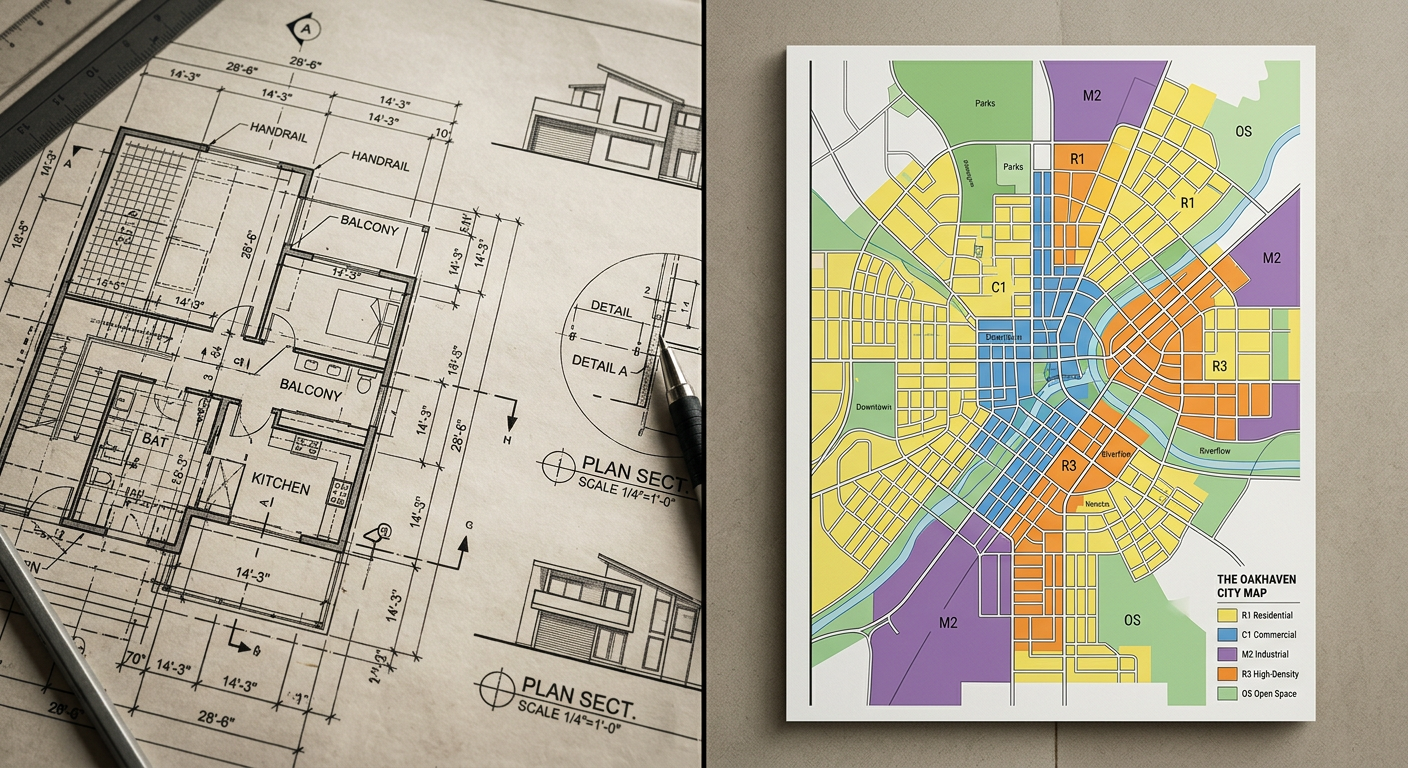
A homeowner wants a modern addition in a historic district. A developer eyes a neglected downtown block for a mixed-use complex. A restaurateur dreams of a flagship location. All need a "local architect," but the definition of local expertise changes radically for each one.
Finding the right firm isn’t about who has the closest office. It is about finding the team with the specific, relevant, and current knowledge required to get your project designed, approved, and built. Their value is measured in insight, not miles.
The Homeowner's Local: Neighborhoods and Nuances
For a homeowner, the best local architect operates at a granular scale. Their knowledge is intimate, rooted in the character and constraints of specific neighborhoods. They are fluent in the language of residential construction, from setbacks and height limits to the unwritten rules of a historic preservation board.
This architect understands the local soil, the prevailing winds, and which side of the street gets the best afternoon light. They have working relationships with the residential plan checkers at the city and know which contractors are reliable, available, and produce quality work at the right budget.
Their portfolio should show more than a preferred style. It must show a sensitivity to context. Look for firms that have successfully added modern extensions to traditional homes, navigated complex variance requests, or built new homes that feel like they belong on their street, even if they are architecturally distinct.
The Developer's Local: Zoning, Politics, and Pulse
For a developer, a local architect’s expertise must be city-wide. Their focus is less on a single lot and more on the systems that govern large-scale development. Their value lies in understanding zoning codes, entitlement pathways, and the political landscape that can make or break a major project.
This architect knows the city’s master plan, sees where public infrastructure is headed, and understands the economic drivers of different districts. They have experience presenting to planning commissions, engaging with community groups, and negotiating the complex trade-offs required for multi-family, commercial, or mixed-use projects.
The right architect for a developer doesn't just design a building. They help to de-risk the entire development process through strategic insight and proven experience with the local regulatory environment.
Their "local" knowledge is about process and people. They cultivate relationships with city planners, engineers, and officials, creating a smoother path to permitting and construction. They are a key strategic partner, not just a design vendor.
The Business Owner's Local: Brand, Context, and Commerce
When a business invests in a physical space, it is building a three-dimensional advertisement. The ideal local architect for a retail, hospitality, or office project understands the intersection of brand identity and urban context. They create spaces that feel authentic to both the company and the city.
This architect knows which commercial contractors can deliver on time and on budget. They are familiar with local vendors for custom fabrication, signage, and lighting. Crucially, they understand the local customer. They know the pedestrian traffic patterns, the competitive landscape, and how to design a facade that draws people in.
Look for an architect who asks deep questions about your business goals, target customer, and operational needs. Their local expertise translates your brand’s story into a physical form that resonates with the community it serves.
How to Vet for True Local Expertise
Once you have a shortlist of firms, you need to dig deeper than their portfolios. The goal is to verify their on-the-ground knowledge. In your conversations, move beyond generalities and ask specific, project-relevant questions.
- For a specific site: "What do you see as the top 3 challenges or opportunities for a project on this particular property or in this neighborhood?"
- Regarding process: "Can you walk me through the typical permitting and approval timeline for a project like this in this city? Who are the key officials or departments we would be dealing with?"
- About relationships: "Which local engineers, contractors, or consultants do you prefer to collaborate with and why? Who would you recommend for this specific type of work?"
- On past projects: "Tell me about a time you had to negotiate a difficult zoning issue or community concern locally. What was the outcome?"
Their answers will quickly reveal the depth of their local knowledge. Vague responses are a red flag. A truly local architect will speak with confidence and specificity.
When Hyper-Local Is Not the Answer
Sometimes, a project is so specialized that the leading expert is halfway across the country. For a state-of-the-art performance hall, a complex laboratory, or a signature tower by a world-renowned designer, the primary design firm may not be local.
In these cases, a common and effective strategy is to pair the "design architect" with a local "architect of record." The design architect establishes the vision, form, and primary aesthetic. The architect of record, based in the project’s city, handles the technical execution, permitting, and construction administration, bringing essential local knowledge to the team.
This hybrid model combines world-class vision with practical, on-the-ground execution. It acknowledges that some design challenges require a global talent pool, while all built projects ultimately require local expertise to become reality.
Ultimately, finding the right architect means you stop searching for "architects near me" and start searching for the firm with the precise local knowledge your project demands. The right fit is an expert and an advocate who understands the unique ecology of your place.
More from Ejal Insights
- Historic Renovation: The Building Physics of Survival
- How to Choose the Right Architect Beyond the Portfolio
- Designing for Acoustic Comfort in Modern Homes
- The End of the Open Plan? How Post-Pandemic Design Is Shaping the Modern Home
- The Hidden Language of Materials in Modern Home Design
- Beyond Decoration: How Interior Architecture Shapes Experience