Why Architectural Style Is the Wrong Way to Choose a Firm
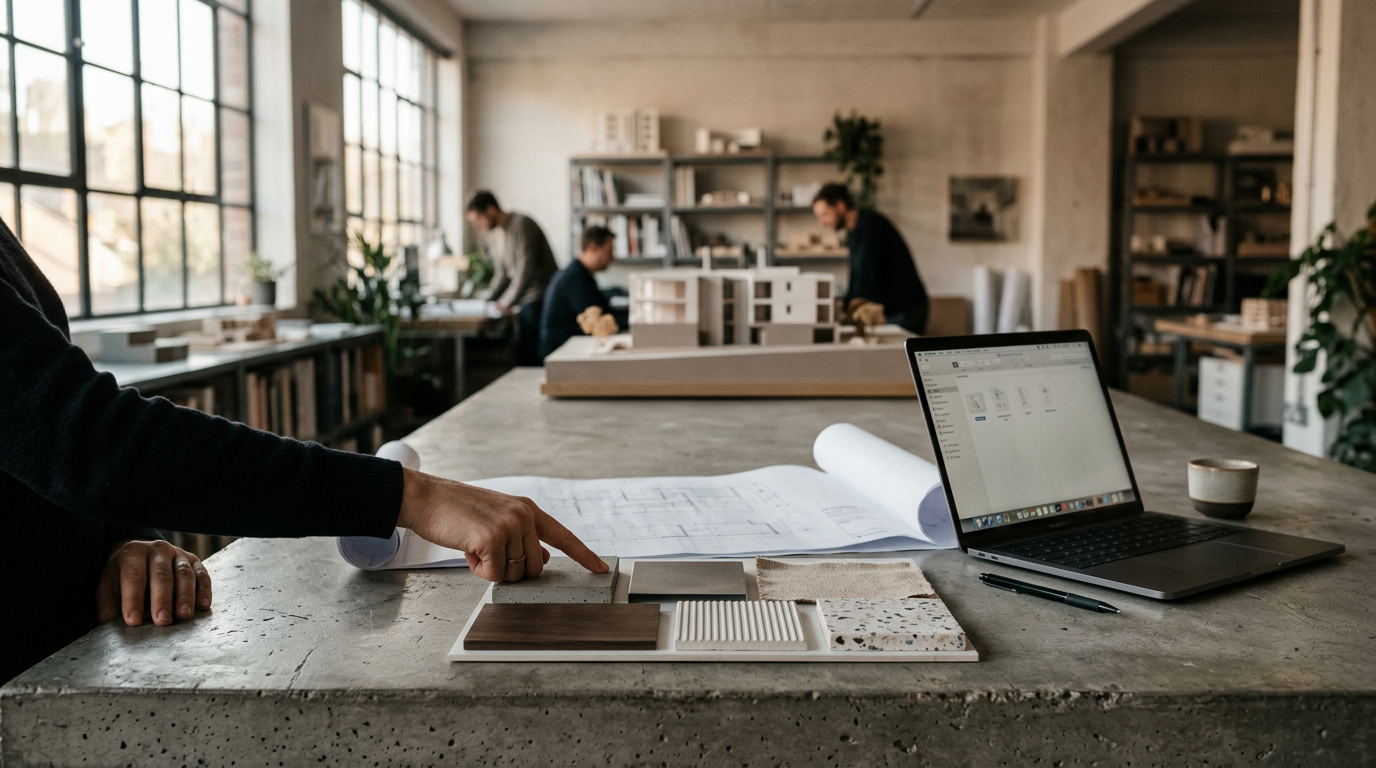
You have a vision. A dozen browser tabs are open, your Pinterest board is overflowing with images of light-filled modern farmhouses or dramatic concrete interiors. The first logical step seems to be finding an architect who does exactly that. This is the most common way to start a project, and it a common mistake.
While a portfolio gives you a sense of an architect’s past work, judging a firm solely on its perceived "style" can lead you to the wrong partner. It prioritizes the final look over the collaborative journey required to create a building that truly serves your needs, your site, and your budget.
The Myth of the Signature Style
The idea of a signature style is powerful. We associate famous architects with distinct aesthetics. Think of Frank Gehry’s sculptural forms or Tadao Ando’s masterful use of concrete. This branding is effective for a handful of global stars, but for the vast majority of projects, it’s not just irrelevant, it’s counterproductive.
Most buildings are not meant to be the singular, unyielding vision of one person. They are for you, the client. A firm that is too married to its own aesthetic may not be willing or able to truly listen. They might try to fit your project into their box, rather than designing a box that perfectly fits you.
Process Over Precedent
Instead of hunting for a specific visual style, savvy clients should look for a firm with a clear, compelling design process. An architect’s process is their unique method for listening, discovering, problem-solving, and translating your abstract goals into physical reality. It is where the real work happens, long before the final look is established.
A strong process is a much better predictor of project success than a portfolio of pretty pictures. When you interview a potential firm, ask about their process. It might include elements like:
- Discovery Workshops: Structured sessions where the architects guide you through exercises to uncover your functional needs, aesthetic preferences, and unspoken assumptions.
- Site Analysis: How do they study the land, the sun, the wind, and the surrounding context? Do they just take measurements, or do they truly seek to understand the place?
- Conceptual Tools: Do they use sketches, physical models, 3D modeling, or virtual reality? How do they help you visualize and understand the design as it evolves?
- Communication Cadence: How will they keep you informed? What do project meetings look like? How are decisions documented and approved?
The Architect as Translator
Think of an architect not as a stylist, but as a highly skilled translator. They are fluent in multiple languages that you, the client, may not speak. They translate your needs into the language of spatial design. They translate that design into the language of construction drawings for the builder.
They also translate the constraints of reality, like building codes, budgets, and physics, into opportunities for creativity. A good firm doesn’t see a limited budget as a creative dead end, but as a challenge that can inspire innovative material choices or a more efficient layout.
The best architecture emerges from a deep understanding of the client's goals and the project's constraints, not from the application of a predetermined look. The final building isn't the architect's style; it's the built expression of a successful collaboration.
This role as a translator and a problem-solver is far more critical than their ability to replicate a photo you found online. You want a partner who can navigate these forces with you, not one who simply presents a finished idea.
What to Look For Instead of Style
If you set aside the search for a specific style, what should you focus on? Look for evidence of a firm’s thinking. Pore over their portfolio not for a recurring aesthetic, but for a recurring level of quality and thoughtfulness across different projects.
Look for a clear design philosophy. This is different from a style. A philosophy might be a commitment to sustainability, a focus on community-centric design, or a belief in material honesty. This tells you why they make the decisions they do.
Look at the range of their work. A firm that has produced a high-quality traditional home, a clever commercial office, and a minimalist gallery demonstrates immense capability. It shows they can listen to different clients and respond to different contexts with equal skill. This adaptability is exactly what you want.
Finally, listen to how they talk about their own projects. Do they speak only of the forms and materials, or do they tell the story of the clients who live there and the problems they solved for them? The latter is a sign of a client-focused firm.
Where a Specific Expertise Matters
Of course, there are exceptions. If your project involves the restoration of a historic landmark, you absolutely need an architect with proven expertise in historic preservation. Their portfolio should demonstrate a deep understanding of the specific materials, methods, and regulations involved.
Similarly, for highly specialized building types like hospitals or laboratories, you will want a firm that has experience with those technical requirements. In these cases, the "style" is one of extreme competence and technical knowledge. But even here, you are choosing them for their expertise and process, not a superficial aesthetic.
Instead of asking, "Can you design a home that looks like this picture?" a better question is, "How would you begin to approach a project like mine?" The answer will tell you everything you need to know. It shifts the conversation from a shallow focus on the final product to a much more meaningful exploration of partnership and process. Start your search on EJAL not by filtering for style, but by reading how firms describe their own unique process of discovery.
More from Ejal Insights
- The Quiet Home: Solving the Acoustic Problem in Modern Design
- Historic Renovation: The Building Physics of Survival
- How to Choose the Right Architect Beyond the Portfolio
- Designing for Acoustic Comfort in Modern Homes
- The End of the Open Plan? How Post-Pandemic Design Is Shaping the Modern Home
- The Hidden Language of Materials in Modern Home Design